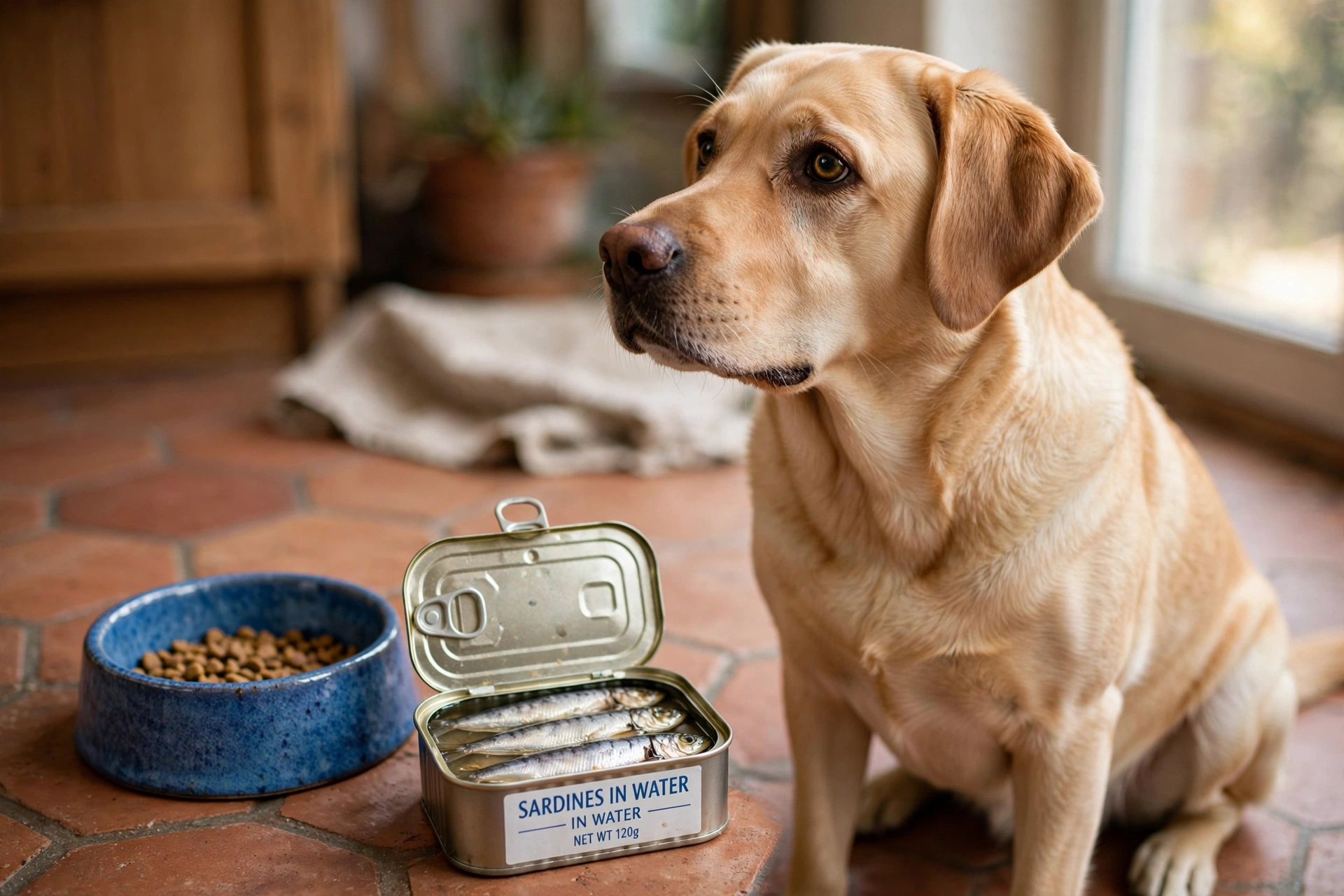

Short answer first, because this is one of the rare “can my dog eat this?” questions with a happy ending: yes, sardines are good for dogs. Genuinely good, not just harmless. A small tin of plain sardines gives your dog omega-3 fats, quality protein, vitamin D and calcium in a form most dogs go slightly mad for, and it does it for less money than most supplements on the pet shop shelf.
So are sardines good for dogs in real life, or just on paper? Both, with a few conditions attached. The tin you buy matters, the amount matters, and a handful of dogs should skip them altogether. Here’s the full picture: the benefits, the portions by size, and the catches worth knowing before you crack the first tin open in front of an audience.
Are sardines good for dogs? Yes — and here’s why
Sardines pack an unusual amount of nutrition into a very small fish. These are the nutrients doing the work:
| Nutrient in sardines | What it does for your dog |
|---|---|
| Omega-3 fatty acids (EPA and DHA) | Support skin and coat health, help calm inflammation, and benefit joints, heart and brain |
| High-quality protein | Builds and maintains muscle; an easy-to-digest animal protein |
| Calcium and phosphorus | Come from the soft, edible bones; support strong bones and teeth |
| Vitamin D | Helps the body use calcium properly and supports immune health |
| Vitamin B12 | Supports the nervous system and red blood cell production |
| Selenium | An antioxidant mineral that supports the immune system and thyroid |
The omega-3s are the headline. PetMD points out that fish is a natural source of omega-3 fatty acids, which matter for a healthy coat and skin and bring a natural anti-inflammatory effect that can help dogs with joint problems like arthritis. That’s why sardines keep showing up in advice for itchy dogs and stiff senior dogs alike: a shiny coat and happier joints from the same cheap little fish.
There’s also a practical bonus nobody mentions. Sardines smell strong, and dogs read that as delicious. A dog who turns his nose up at plain kibble will often eat the whole bowl because a sardine was mashed over the top. For fussy eaters and older dogs whose appetite has faded, that smell is worth as much as the vitamins.
Why do sardines beat bigger fish on mercury?
This is the part that makes sardines a smarter choice than tuna as a regular habit.
Mercury builds up in fish over time, and it concentrates as you move up the food chain. Big, long-lived predators like swordfish, king mackerel and albacore tuna spend years eating smaller fish and collecting what those fish carried. PetMD’s fish guide puts the large, older species on the avoid list for exactly that reason, and notes that smaller, younger fish are far less likely to carry high mercury levels.
Sardines sit at the opposite end of that story. They’re small, they live fast and short lives, and they eat plankton rather than other fish. There simply isn’t time for much mercury to accumulate in them. That low position on the food chain is why sardines can appear in your dog’s bowl regularly in a way that tuna never should.
Regularly still has a limit, mind you. The American Kennel Club advises keeping a dog’s fish intake to no more than twice a week, and sardines are no exception. Think of them as a twice-weekly booster, not a new staple food.
Are sardine bones safe for dogs to eat?
Yes, and this is the second thing that sets sardines apart. If you’ve read our other food guides, you’ll know cooked bones are normally a hard no for dogs. Sardine bones are the exception.
Canned sardines are pressure-cooked in the tin, bones and all, until those bones go soft and crumbly. They bend and mash between your fingers rather than splintering, and dogs digest them without trouble. PetMD confirms sardines can be eaten skin-on and with the bones, while just about every other fish should be carefully deboned first. Those soft little bones are exactly where the calcium in the table above comes from, so fishing them out would throw away half the benefit.
Two ground rules still apply. First, this softness is a canning thing, so it applies to tinned sardines; a fresh sardine you cook at home has firmer bones, and you’d want to prepare it carefully and check it over. Second, skin-on is fine, but anything attached to the fish that isn’t fish, like a stray bit of packaging or a large fin from a bigger species, doesn’t go in the bowl.
How do you choose the right tin of sardines?
The sardine aisle has more traps than you’d expect. Here’s the rule that keeps it simple: packed in water, no added salt. PetMD gives exactly that advice, and it’s the first thing to look for on the label.
| The good tin | The tins to leave on the shelf |
|---|---|
| Packed in spring water | Packed in oil (extra fat and calories your dog doesn’t need) |
| No added salt on the label | Smoked sardines (loaded with salt) |
| Plain, nothing else in the tin | Sardines in tomato sauce (salt, and sauces can contain onion or garlic) |
| MSC-certified label if you can find it | Mustard, chili or herb sauces (seasonings, spice and more salt) |
The oil point trips people up. Sardines in olive oil aren’t poisonous, and if that’s all you have, drain them well and treat it as a one-off. But oil-packed fish roughly doubles down on calories in a food that’s already energy-dense, and for a dog watching his weight that matters.
PetMD also suggests looking for the MSC (Marine Stewardship Council) blue label, which marks fish from sustainable, well-managed fisheries. It costs nothing extra to check, and it keeps your dog’s dinner from costing the ocean more than it should.
Whatever tin you open, drain the liquid off. Even in water-packed fish, that liquid carries much of the sodium that made it into the tin.
How many sardines should a dog eat?
Portions trip people up because a sardine is small and a Great Dane is not. Treat sardines like a topper or supplement, not a meal, and keep all treats and extras together under roughly 10 percent of your dog’s daily calories. As a starting guide for a healthy adult dog, a couple of times a week:
| Dog size | Rough guide per serving |
|---|---|
| Small dog (under 20 lbs) | 1 sardine |
| Medium dog (20–50 lbs) | 2 sardines |
| Large dog (over 50 lbs) | 3 sardines |
Mash the sardines with a fork and stir them through the normal food rather than laying them on top like a trophy. Mixed in, the flavour spreads through the whole bowl, the dog can’t pick the fish out and leave the kibble, and a picky eater gets nutrition in every mouthful instead of a highlight reel followed by disappointment.
Start below these amounts the first time. Half a sardine for a small dog, one for a bigger dog, then watch the litter tray equivalent: your dog’s stools over the next day. Sardines are rich, and a full portion on day one is the usual reason owners end up reading our guide on what to give a dog for diarrhea at midnight. Build up over two or three servings and almost every dog handles them fine.
When are sardines a bad idea for a dog?
For most healthy dogs, sardines are an easy yes. For these dogs, pause first:
Dogs prone to pancreatitis. Sardines are a fatty food, and fat is the trigger vets worry about for dogs with a history of pancreatitis or very sensitive stomachs. A dog who has had pancreatitis should only get sardines with his vet’s blessing, if at all.
Dogs who need to lose weight. There’s nothing unhealthy about the calories, but there are a lot of them in a small package. If your dog is on a strict reduction plan, sardines have to come out of his normal food allowance, not on top of it, or the diet quietly stops working.
Dogs on prescription diets or with kidney or heart problems. Dogs on a vet-prescribed diet shouldn’t get extras without asking, and dogs who must watch their sodium need the no-added-salt tin drained well, or a conversation with the vet first. PetMD’s standing advice on people food applies here: what suits one dog may not suit another with a health condition in the background.
Dogs with a fish allergy. It’s uncommon, but it happens. Itching, ear trouble or an upset stomach that shows up after fish meals is worth mentioning to your vet, and our guide on giving a dog Benadryl explains how vets use it for allergic reactions. New food plus new symptom is a pattern to take seriously, not to push through.
Any dog, if the fish is raw. The AVMA does not recommend raw or undercooked fish for dogs, because raw fish can carry parasites and bacteria. Canned sardines are cooked, which is another quiet argument for the tin over the fish counter. If you buy fresh sardines, cook them plainly and thoroughly, no seasoning, and check carefully for bones.
Conclusion
So, are sardines good for dogs? Yes, about as good as a cheap tinned food gets: omega-3s for skin, coat and joints, proper protein, vitamin D and B12, and calcium from bones that are soft enough to be a benefit instead of a hazard. They beat the big fish on mercury, they beat most supplements on price, and most dogs would rank them somewhere between “excellent” and “please, again.”
Buy the boring tin, water-packed with no added salt. Drain it, mash it through the food, keep it to a sensible portion once or twice a week, and start small. Do that, and the smelly little fish earns its place in the cupboard.
Frequently asked questions
Can dogs eat sardines every day?
Better not. Sardines are rich and fatty, and a daily habit piles up calories fast, especially for small dogs, while crowding out the balanced food that’s supposed to be doing the main job. Once or twice a week gives your dog the omega-3 and calcium benefits without tipping the diet sideways. If you want a daily omega-3 source, ask your vet about a measured fish oil supplement instead, where the dose is controlled.
Can puppies eat sardines?
Yes, in small amounts, once they’re weaned and eating solid food well. Puppies can use the protein and the DHA in omega-3s, and the soft bones are fine for them too. Keep portions tiny, a quarter or half a small sardine mashed into a puppy’s meal is plenty to start, and introduce it on its own rather than alongside three other new foods, so if the puppy’s stomach objects you know exactly who to blame. Check with your vet at the next puppy visit if you plan to make it a regular thing.
Can dogs eat sardines packed in olive oil?
They can, and it won’t harm them as a one-off, but water-packed is the better buy every time. Oil-packed sardines carry a lot of extra fat and calories in the oil clinging to them, which adds up quickly for small dogs and matters for any dog watching his weight or prone to stomach upsets. If olive oil is what you’ve got, drain the tin thoroughly, maybe give the fish a quick rinse, and don’t make it the regular routine.
Are canned sardines better for dogs than fresh ones?
For most owners, yes, and it’s mostly about the bones. Canning softens sardine bones until they’re safe and digestible, which is where the calcium bonus comes from. Fresh sardines are perfectly good food too, but they must be cooked thoroughly and plainly, and their bones stay firmer, so you need to prepare them with more care. The tin is cheaper, keeps for months, and skips all of that, which is why it’s the version most vets end up recommending by default.
Do sardines really help a dog’s coat?
They’re one of the better food-based bets for it. The omega-3 fatty acids in sardines support the skin barrier itself, and a healthy skin barrier is what holds moisture in and produces a coat that looks fed rather than dusty. Owners typically notice a difference in softness and shine after a few weeks of regular servings. Sardines won’t fix a coat problem that’s actually caused by allergies, parasites or a thyroid issue, though, so if the coat is poor alongside scratching or hair loss, that’s a vet conversation, not a bigger sardine portion.
Related Articles