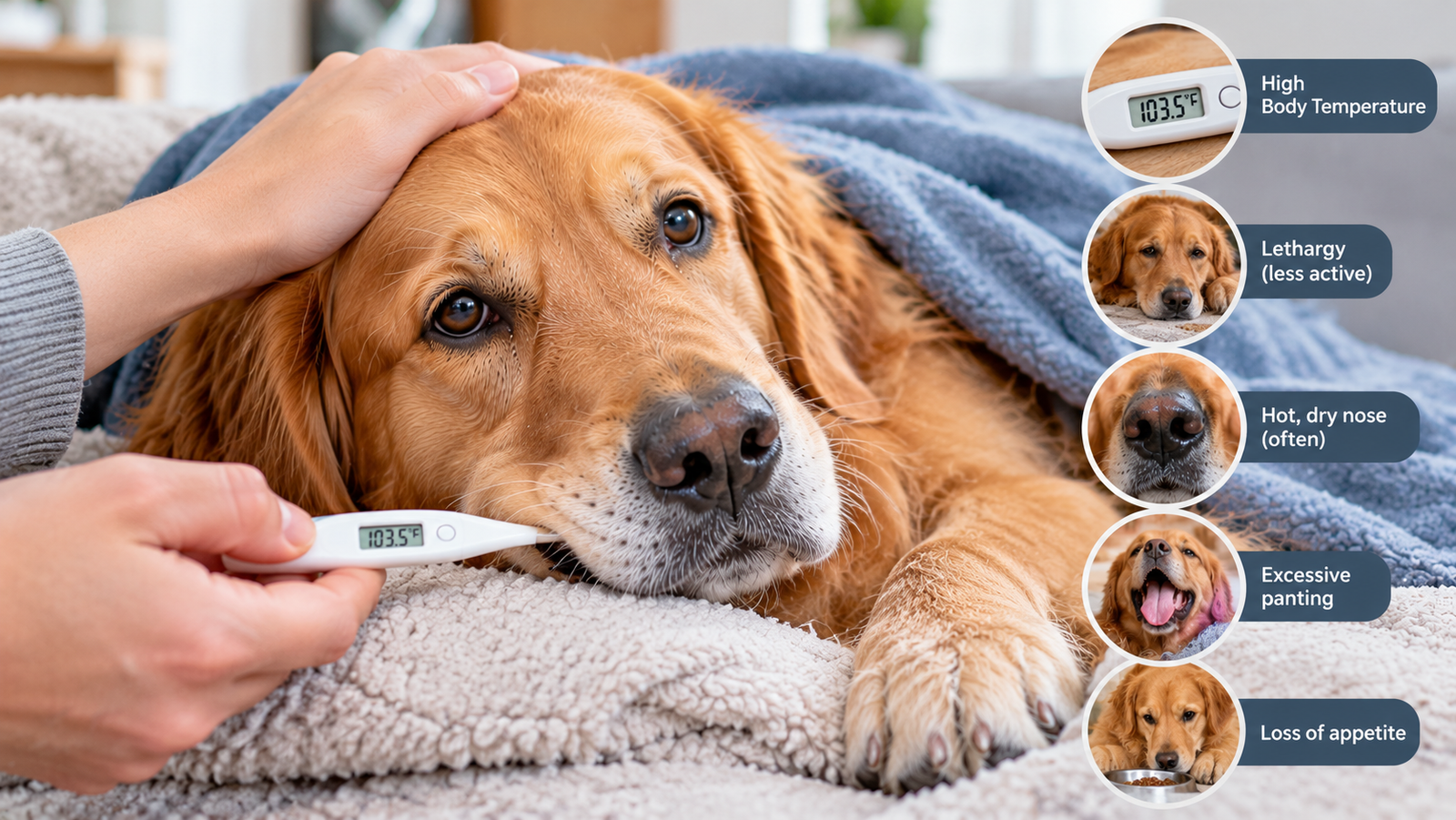

To tell if your dog has a fever, check their body temperature with a digital thermometer and watch for changes in behavior. A dog’s normal temperature is usually about 99.5°F to 102.5°F (37.5°C to 39.2°C) when measured rectally. A reading above that range may need a veterinary check, especially if your dog seems unwell.
Warm ears, a dry nose, or a hot-feeling belly cannot confirm a fever. Dogs naturally run warmer than people, so use symptoms as clues and a thermometer for a more reliable reading. If your dog is weak, struggling to breathe, collapsing, or may be suffering from heatstroke, seek emergency veterinary care rather than delaying to take a temperature.
What Is a Normal Temperature for a Dog?
A dog’s normal rectal temperature is generally 99.5°F to 102.5°F (37.5°C to 39.2°C). This is higher than the typical human temperature, which is why a healthy dog can feel warm when you touch them.
A temperature around 103°F (39.4°C) or higher is concerning and is commonly treated as a fever threshold, although stress, excitement, and recent activity can temporarily raise a reading. Let your dog settle in a cool, quiet place and recheck if they are otherwise comfortable. Contact your veterinarian if the temperature remains elevated or your dog has other symptoms.
Very high temperatures need urgent attention. A reading of 104°F (40°C) or more warrants prompt veterinary advice, and a temperature near or above 106°F (41.1°C) can be life-threatening. Do not wait for a particular number if your dog is visibly distressed or has been exposed to extreme heat.
What Signs Can Suggest Your Dog Has a Fever?
Fever can make a dog seem unlike themselves before you ever use a thermometer. Look for a combination of changes rather than relying on one symptom.
Common signs include:
- Low energy, unusual tiredness, or reluctance to get up.
- Reduced appetite or refusing food.
- Shivering or trembling when the surroundings are not cold.
- Panting more than usual while resting.
- Red or glassy-looking eyes.
- Warm ears or paws, although touch alone is not a reliable test.
- Vomiting, diarrhea, coughing, nasal discharge, or signs of pain, depending on the underlying problem.
Some dogs become quiet and withdraw, while others seem restless or uncomfortable. You may notice that your dog skips a favorite walk, stops playing, hides, or drinks differently. These signs do not prove that a fever is present, but they are good reasons to check the temperature and consider calling a veterinarian.
A dog can also be seriously ill without having a fever. If your pet’s behavior changes suddenly, take the change seriously even when the thermometer gives a normal result.
Pay attention to what is normal for your individual dog. A naturally energetic dog that suddenly sleeps through meals or refuses to go outside may be showing an early sign of illness. Keep track of when the change began and whether it is getting better or worse. A short note about appetite, water intake, bathroom habits, activity, and any new symptoms can help your veterinarian assess the situation. Do not wait for several symptoms to appear before asking for advice if your dog seems clearly unwell.
Can You Tell If a Dog Has a Fever by Touching Their Nose or Ears?
No, touching your dog’s nose, forehead, ears, or belly cannot reliably tell you whether they have a fever. A nose may feel dry after sleeping or change with weather and indoor conditions. Ears and paws can feel warm after exercise, excitement, or time in a warm room.
Use touch only as a reason to look more closely, not as a diagnosis. A dog with a cool, moist nose can still be sick, and a dog with a warm, dry nose may be perfectly healthy. A thermometer provides a much more useful measurement.
How to Take Your Dog’s Temperature at Home
A digital rectal thermometer is generally the most reliable home method when it can be used safely. If your dog is frightened, painful, growling, or struggling, do not force the check. Ask your veterinary clinic to take the temperature instead.
- Prepare the equipment. Use a digital thermometer reserved for your dog, a small amount of water-based lubricant or petroleum jelly, and disposable gloves if available. Keep the thermometer separate from those used by people.
- Ask for help if needed. A second adult can gently steady your dog. Keep your dog calm and avoid pinning them down or putting your face near their mouth.
- Lubricate the tip. Apply a small amount of lubricant to make insertion more comfortable.
- Lift the tail gently. Insert the tip carefully into the rectum only if you know how to do this safely and your dog tolerates handling. Follow the thermometer’s instructions, and never force it or push it deeply.
- Wait for the reading. Hold the thermometer in place until it signals that the measurement is complete, then remove it gently and read the display.
- Clean and record it. Clean the thermometer according to its instructions. Write down the temperature, the time, your dog’s symptoms, and any recent exercise or heat exposure. Share these details with your veterinarian.
Do not use a glass mercury thermometer, and do not try to take an oral temperature by putting a thermometer in your dog’s mouth. Pet ear thermometers may be easier for some dogs, but readings can be less consistent than rectal measurements. Follow the device instructions and tell your vet which method you used.
What Should You Do If the Temperature Is High?
Your next step depends on the reading, your dog’s behavior, and what may have caused the temperature to rise.
- **A mildly elevated reading with no other symptoms:** Let your dog rest in a comfortable, cool room, offer fresh water, and contact your veterinarian for advice if the reading stays high when repeated.
- **A reading of 103°F (39.4°C) or above:** Contact your veterinarian, particularly if your dog is lethargic, refusing food, shivering, vomiting, or showing other signs of illness.
- **A reading of 104°F (40°C) or above:** Seek prompt veterinary guidance. Do not rely on home care alone.
- **A reading around 106°F (41.1°C), collapse, severe weakness, confusion, or breathing trouble:** Treat this as an emergency and go to a veterinary hospital immediately.
If your dog has been outside in hot weather, left in a hot vehicle, or exercised heavily in heat, the problem could be heatstroke rather than a true fever. Heatstroke is an emergency. Move your dog away from the heat, begin gentle cooling with cool (not ice-cold) water if advised by emergency veterinary guidance, and travel to a veterinary clinic immediately. Do not delay care to keep checking the temperature.
Never give your dog human fever medicines such as ibuprofen, naproxen, or acetaminophen unless a veterinarian specifically directs you to do so. These drugs can cause serious harm. Do not use ice baths or force your dog to drink. Keep your dog calm and follow the veterinary team’s instructions.
What Can Cause a Fever in Dogs?
A fever is a sign, not a diagnosis. It can occur when the immune system responds to an infection or inflammation. Possible causes include bacterial, viral, fungal, or parasitic infections; infected wounds; inflammation; immune-related disease; and reactions to some medicines. A veterinarian needs to assess your dog to identify the likely cause.
Tell the clinic when the symptoms began, whether your dog has eaten or drunk normally, and whether there has been vomiting, diarrhea, coughing, a wound, a recent vaccination, travel, boarding, or contact with sick animals. Mention any medicine or supplement your dog has received. These details can help the vet decide whether an examination or tests are needed.
Do not give leftover antibiotics or another pet’s medication. The wrong drug or dose can make matters worse and may hide useful signs without treating the cause.
When Should You Call a Veterinarian?
Call your veterinarian if your dog has a confirmed elevated temperature, symptoms that persist or worsen, or a sudden change in normal behavior. Seek advice sooner for puppies, senior dogs, pregnant dogs, and pets with existing health problems, because they may need more careful assessment.
Get emergency help immediately if your dog collapses, cannot stand, has trouble breathing, becomes confused, has seizures, develops very pale or unusually red gums, or seems severely overheated. Do not wait for a thermometer reading when these signs are present.
Even if the temperature is within the normal range, ongoing vomiting, repeated diarrhea, refusal to drink, marked pain, or extreme tiredness deserves veterinary advice. The number is only one part of the picture.
How to Help Your Dog While You Arrange Care
Keep your dog in a quiet, comfortably cool place and let them rest. Offer small amounts of fresh water, but never force water or food. Avoid exercise, rough play, and exposure to direct sun or hot rooms.
Keep a short record of the temperature and symptoms, including when they started and whether they changed. If possible, take the thermometer reading before calling, but never delay urgent care to do so. Follow your veterinarian’s instructions rather than trying to lower a fever with human medicine, ice, or unapproved home remedies.
Do not assume that a fever has resolved just because your dog seems a little brighter. If the temperature remains high, returns after improving, or new symptoms appear, update your veterinarian.
Conclusion
The most reliable way to tell if your dog has a fever is to measure their temperature with a digital thermometer, preferably rectally when it is safe to do so. A normal reading is usually 99.5°F to 102.5°F, while a persistent reading above about 103°F deserves veterinary advice. Watch for tiredness, poor appetite, shivering, and other changes, and never give human fever medicine. Severe weakness, collapse, breathing trouble, or suspected heatstroke requires emergency care.
For a reference temperature chart, see the Merck Veterinary Manual’s normal rectal temperature ranges.
For signs of heat-related illness and emergency care, read VCA Animal Hospitals’ guidance on heatstroke in dogs.
Frequently asked questions
Can I tell if my dog has a fever without a thermometer?
Not reliably. Warm ears, a dry nose, and a hot belly can happen in healthy dogs. Low energy, shivering, and appetite loss may suggest illness, but a thermometer and veterinary advice are needed to assess a suspected fever.
What temperature is a fever for a dog?
A typical normal rectal temperature is 99.5°F to 102.5°F (37.5°C to 39.2°C). A reading around 103°F (39.4°C) or higher is concerning, especially if it persists or comes with other symptoms. Ask your veterinarian how urgently your dog should be seen.
Can I give my dog Tylenol or ibuprofen for a fever?
No, do not give acetaminophen (Tylenol), ibuprofen, naproxen, or other human fever medicines unless a veterinarian specifically instructs you. These drugs can be toxic to dogs. Call your vet for a safe treatment plan.
When is a dog’s fever an emergency?
Seek emergency care for a temperature around 106°F (41.1°C), suspected heatstroke, collapse, severe weakness, confusion, seizures, or breathing difficulty. A reading of 104°F (40°C) or higher also needs prompt veterinary guidance.
Can a dog have a fever but still eat and play?
Yes. Early or mild illness may cause few obvious changes, and behavior alone cannot rule out fever. Measure the temperature if it is safe, observe your dog closely, and contact your veterinarian about a persistently elevated reading or any other concerning symptom.
Related Articles
Can I Give My Dog Benadryl? Safe Dose and Risks
Can I Use Neosporin on My Dog? Safe Use, Risks & How-To



-
-
-
-
-
-
-
-
-
-
Show Comments[…] you want a closer look at how fit and unwell dogs differ, our guide on how to tell if a dog has a fever covers the home checks that sit alongside a mouth check, and both take under two […]
[…] needs a vet — the same home checks you’d use for any off-color dog apply, and our guide on how to tell if a dog has a fever walks through them. Grief and illness can look alike, and only one of them should be waited […]
[…] a shard in it. A fever on day two or three matters just as much, and the checks in our guide on how to tell if a dog has a fever will help you confirm […]
[…] often one of the first signs. Our guide on how to tell if a dog has a fever shows you what to check at […]
[…] second day. A rising temperature is another quiet warning sign in that first week, and our guide on how to tell if a dog has a fever walks through the home checks if you’re not sure what you’re feeling […]
[…] hot — a raised temperature alongside a rear-end problem suggests infection, and our guide on how to tell if a dog has a fever shows you how to check at […]
[…] off — off his food, running a temperature, or fighting a bug — skip the trip. Our guide on how to tell if a dog has a fever will help you decide, and errands can always wait a […]
[…] closely, it helps to know the everyday checks that tell you how he is really doing — our guide on how to tell if a dog has a fever and the signs in why your dog is breathing fast are the two owners reach for most in a dog’s […]
[…] mode, it is worth knowing the other quick checks that help a vet build the picture; our guide on how to tell if a dog has a fever takes two minutes and pairs well with a few days of water […]
[…] bowl is always worth it — if he seems off in himself generally, the home checks in our guide on how to tell if a dog has a fever are a good place to […]