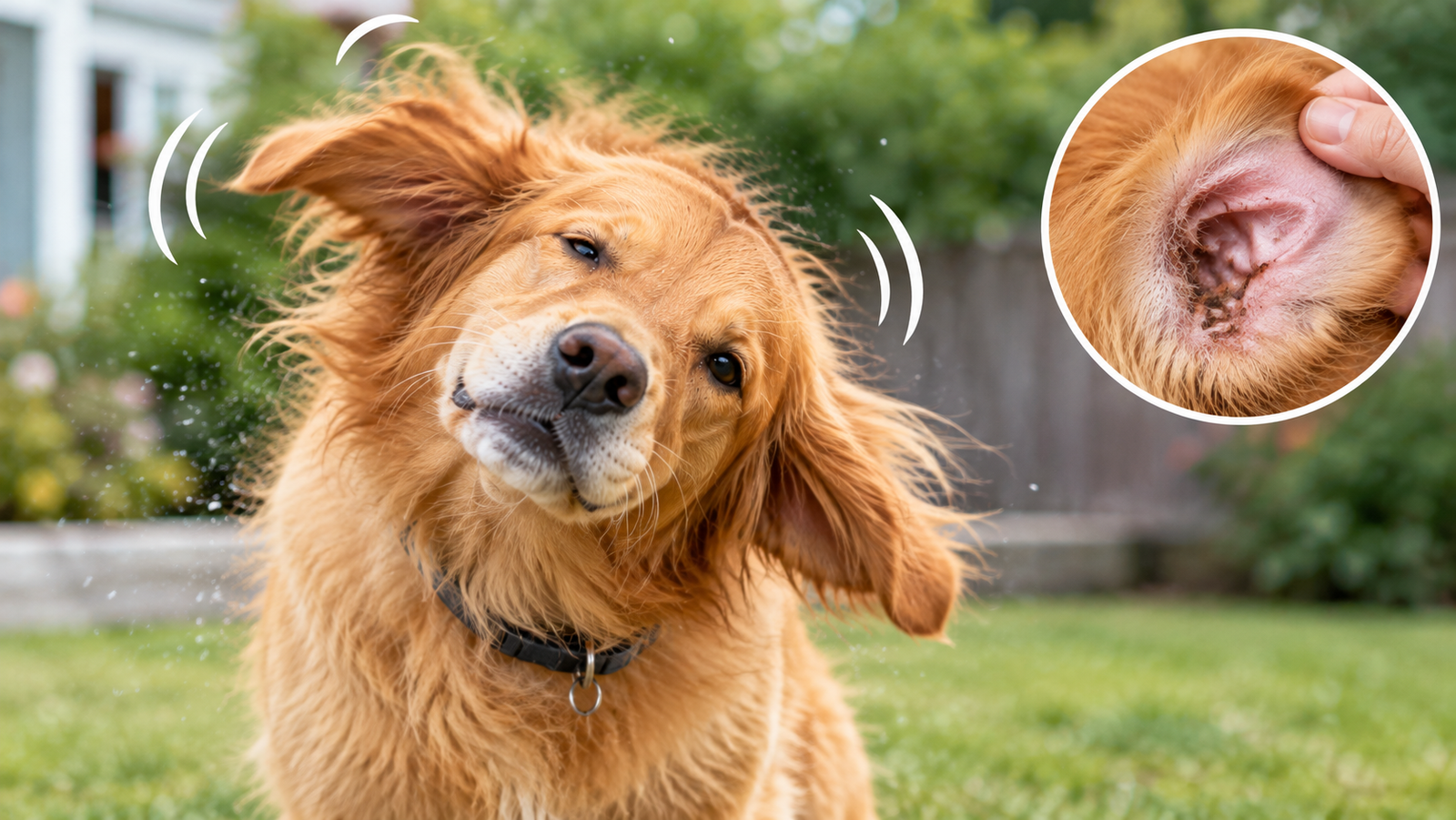

If your dog keeps shaking his head, something is probably irritating or hurting one or both ears. Common causes include an ear infection, allergies, trapped water, ear mites, or a small object stuck in the ear canal. An occasional shake after a bath or walk can be normal, but repeated or forceful shaking deserves attention, especially if you notice odor, discharge, redness, pain, or a head tilt.
Why Does My Dog Keep Shaking His Head?
Dogs shake their heads to try to relieve itching, pain, pressure, or the feeling that something is inside an ear. A single shake may clear water or dust. If the movement keeps happening, the irritation has probably not gone away, and shaking alone will not fix the underlying problem.
Check whether your dog is also scratching one ear, rubbing the side of the face on furniture, whining when the ear is touched, or holding the head at an angle. These details can help your veterinarian narrow down the cause. Do not assume the ear is healthy just because you cannot see anything from the outside. Problems can sit deeper in the ear canal.
What Are the Most Common Causes of Head Shaking in Dogs?
1. Ear infections
An outer-ear infection, also called otitis externa, is a frequent reason for ongoing head shaking. Yeast or bacteria can overgrow in an irritated ear canal. The ear may look red or swollen, smell unpleasant, or produce brown, yellow, or dark discharge. Your dog may scratch, flinch when touched, or seem unusually grumpy because the ear hurts. For more detail, read the Merck Veterinary Manual’s guide to dog ear infections.
Moisture, allergies, parasites, and other ear problems can help trigger an infection. Treatment depends on what is found in the ear, so leftover drops or a random over-the-counter product may not work. A veterinarian may need to examine the canal and test a sample of the discharge.
2. Allergies
Environmental allergies to pollen, dust mites, or mold can make the skin inside the ears inflamed and itchy. Some dogs also react to ingredients in food. Along with head shaking, you might see paw licking, face rubbing, itchy skin, or repeated ear infections.
If the shaking comes back every few weeks or months, ask your veterinarian whether an underlying allergy could be involved. Treating an infection may help in the short term, but recurring symptoms can continue if the trigger is not managed.
3. Water or wax in the ear
Water trapped after swimming or bathing can irritate the ear canal. A buildup of wax or ordinary debris can also cause discomfort. A brief shake after getting wet may settle quickly. Continued shaking, scratching, odor, or discharge suggests that more than a passing bit of water may be involved.
Keep the ears dry after swimming and bathing, and avoid directing water into the ear opening. If your dog often develops ear trouble after swimming, ask your veterinarian whether a suitable ear-drying product is appropriate. Do not pour a product into an ear that is painful or may be injured without veterinary advice.
4. Ear mites
Ear mites are tiny parasites that cause intense itching. They are more common in young animals, though adult dogs can get them too. You may see dark, crumbly debris that resembles coffee grounds, along with scratching and repeated head shaking. These signs can look similar to an infection, so appearance alone cannot confirm mites.
A veterinarian can check an ear sample and recommend the right parasite treatment. If other pets in the home have contact with the affected dog, ask whether they also need checking or treatment.
5. A foreign object in the ear
A grass seed, plant awn, small insect, or other piece of debris can enter the ear canal, particularly after a walk through tall grass. The shaking may begin suddenly and may affect only one side. Your dog may look distressed or repeatedly paw at that ear.
A lodged object can injure the canal or cause infection if it stays there. Arrange a prompt veterinary exam, especially when the shaking began abruptly after outdoor activity. Do not probe with tweezers or push a cotton swab into the ear, because this can drive the object deeper or damage delicate tissue.
6. Injury or swelling of the ear flap
Frequent, forceful shaking can break small blood vessels in the ear flap. Blood and fluid then collect under the skin, creating a soft, thick, balloon-like swelling called an aural hematoma. The flap may feel warm or painful, and the swelling can affect part or all of the ear.
This swelling needs veterinary care, and the original cause of the shaking also needs attention. Do not squeeze, puncture, or try to drain the ear at home.
7. Deeper ear disease or another medical problem
Inflammation or infection can sometimes affect the middle or inner ear. These problems may cause pain, a persistent head tilt, stumbling, circling, reduced hearing, or unusual eye movements. Less commonly, a growth or a neurologic condition can cause signs that resemble ordinary head shaking.
Balance changes, a marked head tilt, or difficulty walking are not symptoms to watch for several days at home. Seek urgent veterinary advice, as deeper ear disease and neurologic problems need prompt assessment.
What Signs Should I Look for Along With Head Shaking?
Look at the outside of each ear without inserting anything into the canal. Notice whether one ear looks red, swollen, crusty, or different from the other. Also check for discharge, a bad smell, frequent scratching, pain when touched, or a change in your dog’s hearing or balance.
The pattern matters. Sudden, intense shaking on one side after a walk can suggest a foreign object. Repeated episodes with itchy skin or paw licking may point toward allergies. Dark debris can occur with mites or infection, but these clues are not enough to diagnose the cause at home.
When Should I Call a Veterinarian?
Contact your veterinarian promptly if your dog keeps shaking his head, repeatedly scratches at the ears, has discharge or a bad smell, or reacts as if the ear hurts. Do not wait for symptoms to become severe. Persistent shaking can injure the ear flap and can leave an infection or foreign object untreated.
Seek urgent, same-day care if your dog has a sudden head tilt, loss of balance, repeated falling, unusual eye movements, severe pain, bleeding, a rapidly swelling ear flap, or sudden hearing changes. If your dog seems very unwell or cannot stand normally, use an emergency veterinary service.
What Can I Safely Do at Home?
You can take a few simple steps while arranging advice, but home care should not replace an exam when the shaking continues.
- Look at the outer ear only. Note redness, swelling, odor, discharge, or whether one side seems worse.
- Keep the ears dry. Avoid swimming and do not let bath water run into the ear canals until the problem is understood.
- Prevent rough scratching if possible. If your dog is injuring the ear, ask a veterinary clinic whether a protective cone is suitable while you arrange care.
- Record when the shaking started and any recent swimming, bathing, grooming, or walks through tall grass. A short video can help show the vet what you are seeing.
Do not put alcohol, hydrogen peroxide, vinegar, oils, or human ear drops into the ear. Avoid using leftover pet medication, too. Some products can irritate an inflamed canal, and certain medicines may be unsafe if the eardrum is damaged. Never insert cotton swabs, tweezers, or other tools into the ear canal. A veterinarian can tell you whether cleaning is safe and which product to use.
How Will a Veterinarian Find the Cause?
The veterinarian will ask when the shaking began, whether it affects one or both ears, and whether your dog has had ear trouble before. They may examine the skin and ear flaps, then use an otoscope, a lighted instrument that lets them look inside the ear canal and assess the eardrum when visible. The VCA Animal Hospitals overview of ear infections in dogs also explains why an exam is needed before choosing ear medication.
A sample of ear debris may be checked under a microscope for yeast, bacteria, or parasites. If the ear is very painful or blocked, sedation may be needed to examine it safely or remove an object. Recurrent cases may call for further investigation into allergies or other underlying conditions.
Treatment depends on the cause. It may include prescribed ear medication, parasite treatment, careful cleaning, pain relief, removal of a foreign object, or a plan to control allergies. Follow the full treatment instructions even if the shaking improves quickly, and arrange a recheck if your veterinarian recommends one.
How Can I Help Prevent Head Shaking From Returning?
Prevention depends on the reason it happened. For dogs that swim or get bathed often, keep water out of the ear canals and dry the outer ears gently afterward. Use only a veterinarian-approved ear cleaner when cleaning is needed. Too much cleaning or the wrong product can make irritation worse.
If your dog has repeated infections, ask about the underlying cause instead of treating each episode as a separate problem. Allergy management, regular checks, and following a vet’s cleaning plan may reduce flare-ups. Dogs with floppy or hairy ears may need an individual care routine, but every dog’s ears should be checked based on their needs rather than cleaned on a fixed schedule without advice.
Conclusion
A dog that keeps shaking his head is usually reacting to ear irritation, an infection, allergies, mites, trapped moisture, or something lodged in the ear. Check the outer ear for visible changes, but do not insert tools or home remedies into the canal.
If shaking persists or comes with odor, discharge, pain, swelling, a head tilt, or balance problems, contact a veterinarian promptly. Finding the cause is the safest way to relieve discomfort and prevent it from returning.
Frequently asked questions
Why is my dog shaking his head but his ears look clean?
An ear problem can sit deep in the canal and may not be visible from the outside. If the shaking repeats, a veterinarian should examine the ears rather than relying on appearance alone.
Can I put ear drops in my dog’s ears for head shaking?
Do not use ear drops unless a veterinarian recommends them for this episode. Different causes need different treatments, and some products can be harmful if the eardrum is damaged.
Is head shaking after a bath normal for dogs?
A few shakes after getting wet can be normal. If shaking continues, or you notice scratching, odor, discharge, pain, or redness, arrange a veterinary check.
How do I know if my dog has an ear infection?
Possible signs include repeated head shaking, scratching, redness, swelling, an unpleasant smell, pain, and dark or yellow discharge. A veterinary exam and ear sample may be needed to confirm the cause.
Can head shaking damage my dog’s ear?
Yes. Forceful, repeated shaking can rupture small blood vessels in the ear flap and cause a fluid-filled swelling called an aural hematoma. Persistent shaking should be assessed so the cause and any injury can be treated.
Related Articles
Why Is My Dog Throwing Up Yellow? Causes & Care
What Does Ringworm Look Like on a Dog?


[…] Why Does My Dog Keep Shaking His Head? 7 Causes […]
[…] Why Does My Dog Keep Shaking His Head? 7 Causes […]
[…] Why Does My Dog Keep Shaking His Head? 7 Causes […]