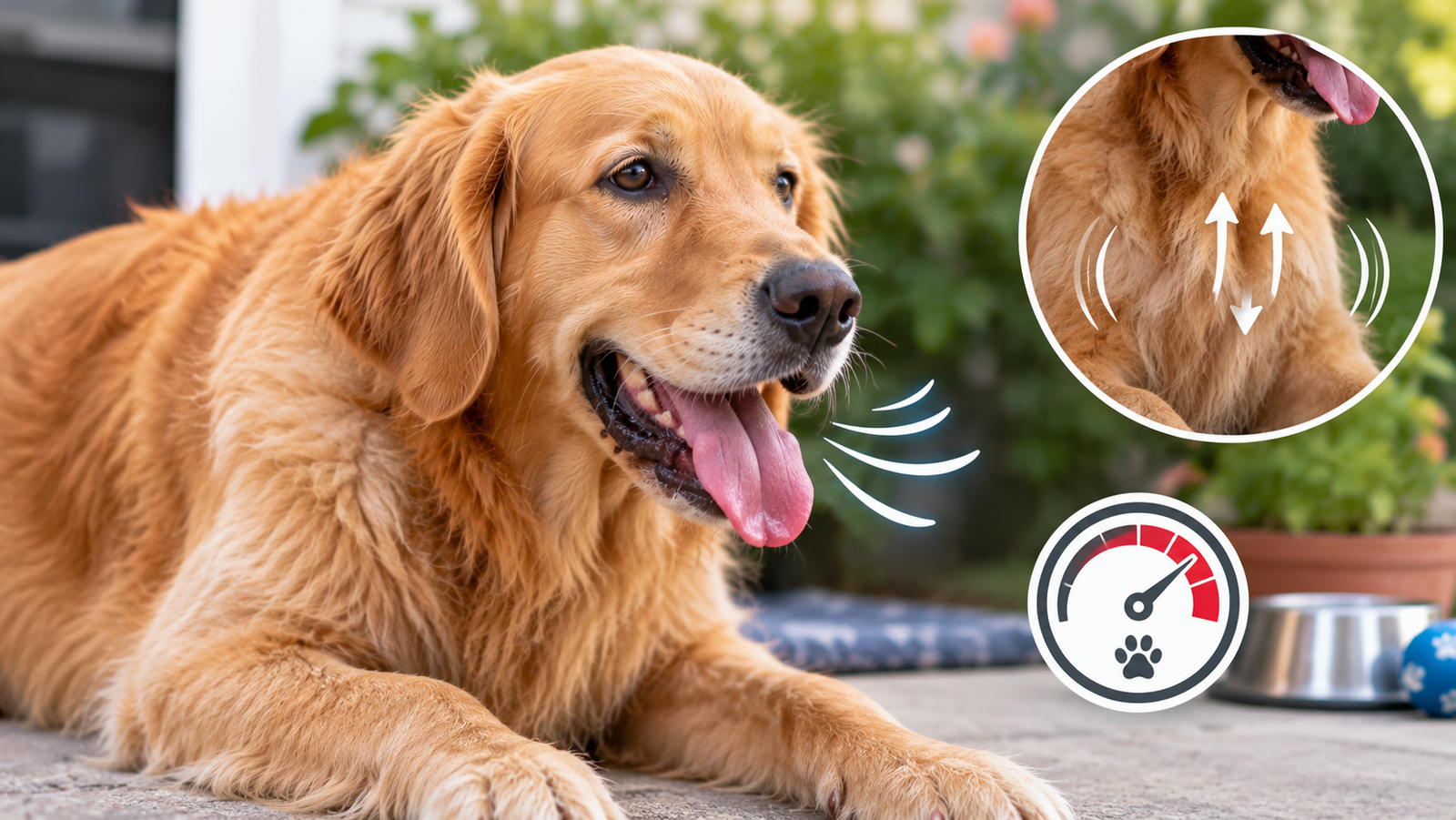

A dog may breathe fast after exercise, in hot weather, or when excited or anxious. However, fast breathing that continues while your dog is calm or asleep can signal pain, overheating, heart or lung disease, or another medical problem. If your dog is struggling to breathe, has blue or very pale gums, collapses, or cannot get comfortable, seek emergency veterinary care now.
What Is a Normal Breathing Rate for a Dog?
A healthy adult dog usually takes about 12 to 30 breaths per minute while resting. The rate can rise during play, excitement, stress, or warm weather, so measure it when your dog is calm and not panting from activity.
To count breaths, watch your dog’s chest. One rise and fall counts as one breath. Count for 30 seconds and multiply by two, or count for a full minute. If your dog is sleeping, wait until they are settled and not actively dreaming or twitching.
A resting or sleeping rate that repeatedly stays above 30 breaths per minute deserves a call to your veterinarian, especially if this is new for your dog. A number alone does not diagnose a condition. How hard your dog is working to breathe, gum color, energy, and other symptoms matter just as much. Do not delay emergency care to count breaths if your dog appears distressed.
Why Is My Dog Breathing Fast?
1. Exercise, excitement, or stress
Running, playing, greeting visitors, riding in a car, or feeling frightened can make a dog breathe quickly. Panting helps dogs release body heat, and stress can also raise their breathing rate. The rate should gradually slow after activity stops and your dog settles in a quiet, cool place.
If the breathing remains fast after a period of calm rest, seems unusually forceful, or comes with weakness, coughing, or discomfort, do not assume excitement is the cause. Contact a veterinarian for advice.
2. Heat and overheating
Dogs rely heavily on panting to cool themselves. Hot weather, high humidity, intense exercise, poor airflow, or being left in a hot vehicle can cause rapid breathing. Heatstroke is a life-threatening emergency and can progress quickly.
Warning signs include very heavy panting, thick drool, vomiting, diarrhea, weakness, confusion, bright red or abnormal-colored gums, or collapse. Move your dog away from the heat and contact an emergency veterinarian immediately if heatstroke is possible. Begin gentle cooling with cool, not ice-cold, water while arranging care, and do not force your dog to drink.
3. Pain or injury
A dog in pain may breathe faster even when lying still. Possible triggers include an injury, abdominal pain, joint problems, or pain after surgery. Your dog may also whine, tremble, guard part of the body, hide, refuse food, or resist being touched, although some dogs show few obvious signs.
Do not give human painkillers unless a veterinarian specifically directs you to do so. Some common human medicines can be dangerous for dogs. If fast breathing begins after a fall, accident, or other injury, seek prompt veterinary care.
4. Heart or lung disease
Problems affecting the heart, lungs, or airways can make it harder for a dog to get enough oxygen. Conditions may include congestive heart failure, pneumonia, airway obstruction, fluid around the lungs, or other respiratory disease. Fast breathing during sleep can sometimes be an early sign, even before a dog seems very ill.
Other signs may include coughing, reduced stamina, unusual tiredness, noisy breathing, or difficulty lying down. These symptoms need veterinary assessment. Labored breathing, blue or gray gums, or collapse means emergency care.
5. Fever, infection, or anemia
A fever or infection can increase breathing rate as the body responds to illness. Anemia, which means too few red blood cells or too little hemoglobin to carry oxygen effectively, can also lead to faster breathing. Your dog may seem weak, tired, less interested in food, or less willing to walk.
These problems cannot be confirmed by watching breathing alone. A veterinarian may need to check your dog’s temperature, examine them, and run blood tests or other checks.
6. Medication, toxins, or other medical problems
Some medicines can affect panting, while exposure to certain toxins can cause rapid breathing alongside drooling, vomiting, tremors, agitation, or weakness. Abdominal swelling and other serious conditions can also interfere with comfortable breathing.
If you suspect your dog has swallowed a medicine, chemical, or unknown substance, contact a veterinarian or animal poison service right away. Do not try to make your dog vomit unless a veterinary professional tells you to.
When Is Fast Breathing an Emergency?
Treat breathing trouble as an emergency if your dog shows any of these signs:
- The belly is pumping hard or the chest is moving with obvious effort.
- The neck is stretched forward, elbows are held out, or your dog cannot lie down comfortably.
- The gums or tongue look blue, gray, white, or unusually pale.
- Your dog collapses, becomes very weak, seems confused, or cannot stand.
- There is choking, loud wheezing, severe coughing, or suspected blockage.
- Fast breathing follows heat exposure, serious injury, smoke, or possible poisoning.
Go to an emergency veterinary clinic rather than waiting to see if the breathing settles. Keep your dog as calm as possible, minimize handling, and let them stay in the position that makes breathing easiest. Call the clinic while you are on the way if you can do so without delaying departure.
What Should You Do if Your Dog Is Breathing Fast?
First, look at your dog’s overall condition. If breathing is labored or your dog has any emergency sign above, leave for veterinary care immediately. Do not spend time taking repeated measurements or trying home remedies.
If your dog has just exercised or become excited and otherwise seems comfortable, stop activity and move them to a quiet, cool area. Offer access to fresh water without forcing them to drink. Watch whether breathing gradually returns to normal.
Once your dog is resting, count the breaths and note the result, the time, and any symptoms. If the resting rate repeatedly exceeds about 30 breaths per minute, contact your veterinarian promptly for guidance. If the rate is rising, does not settle, or your dog has any other concerning change, seek urgent assessment.
A short video of the breathing can help the veterinarian understand what you saw, but only record it if your dog is stable and doing so will not delay care. Note recent exercise, heat exposure, possible injury, medication changes, coughing, appetite changes, and when the fast breathing began.
How Will a Veterinarian Find the Cause?
A veterinarian will assess your dog’s breathing effort, gum color, heart rate, temperature, and general condition. They will ask when the problem started and whether it happens during sleep, after activity, or throughout the day. If your dog is in distress, the clinic may provide oxygen and stabilize them before performing a full workup.
Depending on the findings, tests may include blood work, chest X-rays, ultrasound, or heart tests. Treatment depends on the cause. A dog with overheating needs a different plan from one with pain, infection, heart disease, or a blocked airway, so medication should not be chosen based on fast breathing alone.
You can read the Cornell University College of Veterinary Medicine’s guidance on canine respiratory distress for additional information about warning signs. For measuring resting breathing at home, VCA Animal Hospitals explains how to check a pet’s breathing rate.
Conclusion
Fast breathing can be a normal response to exercise, heat, or excitement, but it should settle once your dog is calm and cool. Repeatedly fast breathing at rest deserves a call to your veterinarian, and breathing with visible effort, abnormal gum color, weakness, or collapse is an emergency.
Check your dog’s breathing when they are settled, watch for other symptoms, and seek help early rather than trying to diagnose the cause at home.
Frequently asked questions
Why is my dog breathing fast while sleeping?
A sleeping dog may briefly breathe faster during a dream, but a consistently elevated rate can signal pain or heart, lung, or other illness. Count breaths when your dog is settled and contact your veterinarian if the rate repeatedly exceeds about 30 per minute.
Why is my dog breathing fast but acting normal?
Heat, recent activity, excitement, and stress can cause temporary fast breathing. If it continues during quiet rest, keeps returning, or comes with coughing or reduced energy, contact your veterinarian even if your dog otherwise seems normal.
How can I tell if my dog is struggling to breathe?
Look for strong belly movement, stretched neck, flared nostrils, noisy breathing, inability to lie down, or blue, gray, or very pale gums. These signs need emergency veterinary attention.
Should I be worried if my dog breathes fast after a walk?
Some faster breathing and panting after exercise is normal and should ease as your dog rests in a cool place. If breathing does not settle, seems labored, or is paired with weakness, vomiting, or abnormal gums, seek veterinary care.
Can anxiety make a dog breathe fast?
Yes. Fear and stress can raise a dog’s breathing rate, often with pacing, trembling, or clinginess. Once the trigger is removed, breathing should settle. Do not assume anxiety is responsible if the rate stays high at rest or your dog appears unwell.
Related Articles
Why Does My Dog Keep Shaking His Head? 7 Causes
Why Is My Dog Throwing Up Yellow? Causes & Care

[…] stairs he has climbed for years. Dogs in pain often breathe faster and tremble, and our guide to why dogs breathe fast covers those signals in more detail. With a long-backed breed, treat that cluster as a back problem […]
[…] is telling you the stimulants are kicking in. If that panting won’t ease off, our guide on why your dog is breathing fast helps you judge what’s abnormal, but with chocolate in the picture, don’t sit at home […]
[…] and get licked off during grooming. If your dog already struggles with his airways, our guide to why your dog is breathing fast explains which breathing changes should never be ignored, and a mist-filled room is exactly the […]