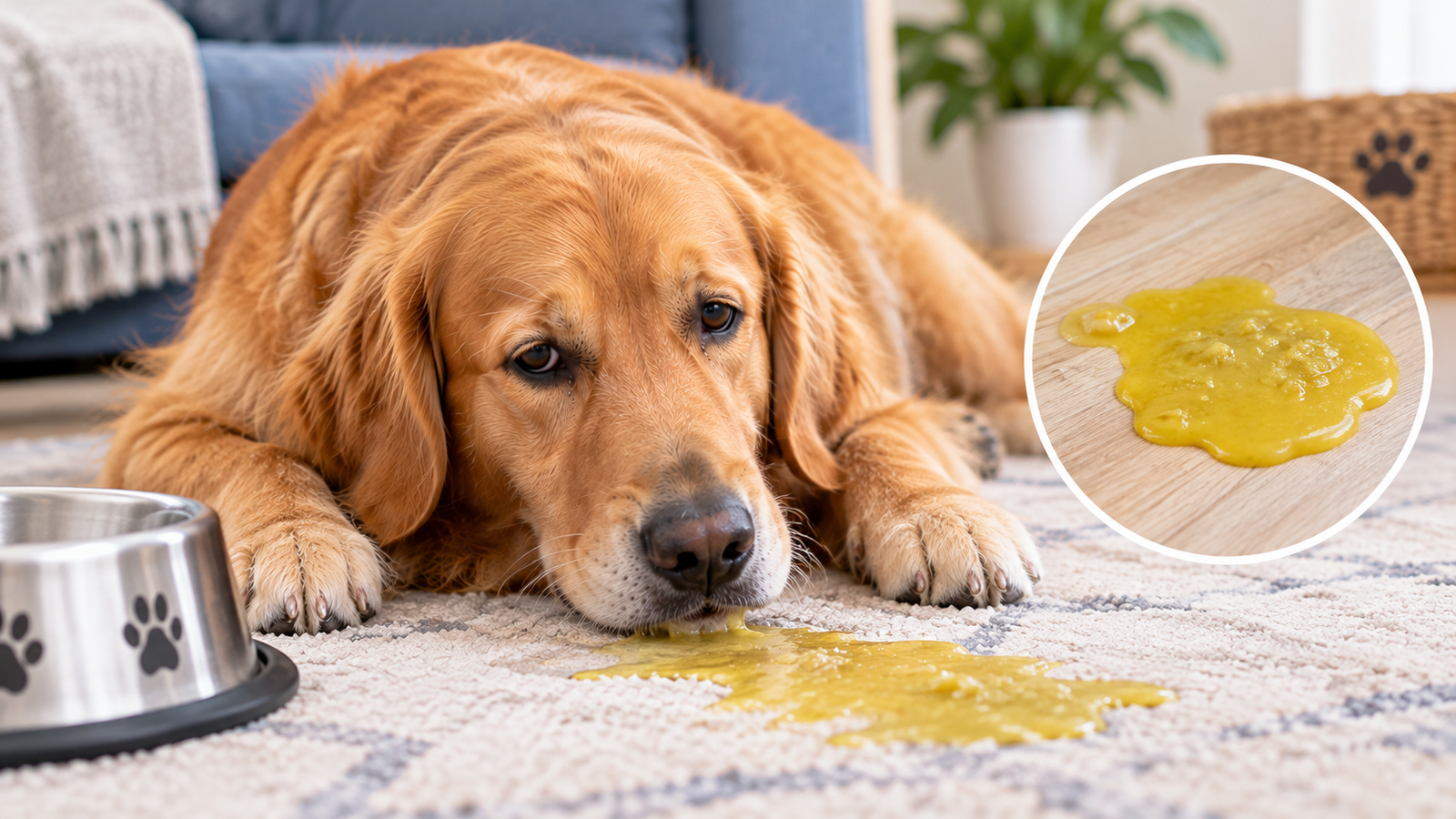

If your dog is throwing up yellow liquid or foam, the material is often bile, a digestive fluid made by the liver and stored in the gallbladder. Bile may come up when the stomach is empty, such as early in the morning, but yellow vomit can also occur with stomach irritation, dietary indiscretion, infection, pancreatitis, or an intestinal blockage.
One episode in a dog who is otherwise bright and comfortable may be minor. Repeated vomiting, pain, weakness, blood, or trouble keeping water down needs prompt veterinary attention.
What does yellow vomit mean in dogs?
Yellow vomit usually means bile is present. Bile helps the body digest fats after it enters the small intestine. If it moves back into the stomach, or if a dog vomits after the stomach has emptied, it can appear as yellow or yellow-green fluid. It may be watery, slimy, or mixed with white foam.
The color alone cannot tell you exactly what is wrong. A dog can bring up bile after a long gap between meals, but the same color can appear after several bouts of vomiting caused by illness. Look at the whole picture: how often your dog vomits, whether they can drink, their energy level, appetite, stool, and whether their belly seems painful or swollen.
Why is my dog throwing up yellow? Common causes
An empty stomach is one possible cause, especially when vomiting happens before breakfast and the dog seems normal the rest of the day. Some dogs experience bilious vomiting syndrome, in which bile irritates the stomach after a long period without food. A veterinarian should assess repeated episodes before assuming this is the cause.
Eating something unusual is another common trigger. Table scraps, rich or fatty food, garbage, spoiled food, grass, or a sudden change in diet can upset a dog’s digestive system. Food intolerance and parasites may also cause vomiting, often with loose stool, gas, or changes in appetite.
More serious causes include gastroenteritis, pancreatitis, and infections. Pancreatitis is inflammation of the pancreas and may cause vomiting, abdominal discomfort, diarrhea, and reduced appetite. Dogs may also vomit because of kidney or liver disease, hormone disorders such as Addison’s disease, or exposure to a toxic substance.
An object swallowed during play, such as a toy piece, sock, bone fragment, or corn cob, can block the stomach or intestine. A blockage may begin with vomiting and later cause pain, weakness, or refusal to eat. It is an emergency, so do not wait for the vomit to change color or for every warning sign to appear.
When is yellow vomit an emergency?
Seek emergency veterinary care if your dog has a swollen or painful abdomen, repeatedly retches without bringing anything up, collapses, has trouble standing, appears very weak, or has difficulty breathing. These signs can indicate a life-threatening problem, including bloat or an intestinal obstruction.
Blood in the vomit, vomit that looks like coffee grounds, black or tarry stool, pale gums, or signs of severe dehydration also require urgent assessment. Treat possible exposure to poison, human medication, cleaning products, toxic foods, or a swallowed object as urgent even if your dog currently seems fine.
Call a veterinarian the same day if your dog vomits more than once, cannot keep small amounts of water down, has diarrhea or a poor appetite, seems unusually tired, or continues to vomit yellow fluid on different days. Puppies, older dogs, very small dogs, and dogs with existing health problems can become unwell faster, so use a lower threshold for seeking advice.
What should you do if your dog throws up yellow once?
If it happens only once and your adult dog is alert, comfortable, breathing normally, and behaving as usual, keep a close eye on them. Note the time, amount, appearance, and any recent food, treats, medications, or possible access to rubbish. A photo of the vomit can help your veterinarian if you need to call.
Offer small amounts of fresh water rather than letting your dog gulp a large bowl at once. If water triggers more vomiting, contact a veterinarian promptly. Do not force food or water, and do not give human medicines, antacids, or leftover pet prescriptions unless a veterinarian tells you to.
Once vomiting has stopped and your dog is acting normally, ask your veterinarian whether a small portion of an easily digested food is suitable.
Avoid rich treats, fatty scraps, and sudden diet changes. Do not impose a long fast without veterinary guidance, especially for puppies, toy breeds, diabetic dogs, or pets with other medical conditions. If vomiting returns or your dog develops another symptom, stop home monitoring and seek veterinary advice.
Could an empty stomach be the reason?
A pattern of bringing up a small amount of yellow fluid early in the morning, after going many hours without food, can fit bilious vomiting syndrome. Affected dogs may lick their lips, drool, swallow repeatedly, or seem mildly nauseated before vomiting. They often feel better afterward, but the pattern should still be discussed with a veterinarian because other diseases can look similar.
If your veterinarian rules out other causes, they may suggest adjusting meal timing. Some dogs do better with smaller meals spaced through the day or a small portion of their usual food shortly before bedtime. Keep the total daily amount appropriate for your dog’s size and activity, rather than simply adding extra calories.
If a bedtime snack does not help, episodes become more frequent, or appetite and energy change, arrange another veterinary review. Do not diagnose bilious vomiting syndrome based only on the color or time of day.
How will a veterinarian find the cause?
Your veterinarian will ask when vomiting began, how often it happens, what the vomit looks like, and whether your dog has eaten anything unusual. They may ask about stool, thirst, urination, appetite, recent diet changes, medications, travel, and access to chemicals or objects. Be clear about any chance your dog swallowed something.
The examination may include checking hydration, temperature, gums, and the abdomen. Depending on the history and findings, tests may include blood work, a stool test, X-rays, or ultrasound. These can help identify dehydration, infection, organ problems, pancreatitis, or a possible blockage. Not every dog needs every test.
Treatment depends on the cause. A mild digestive upset may need supportive care and a suitable diet, while dehydration may require fluids. Other conditions can need prescription medication, targeted treatment, hospitalization, or surgery. Never try to induce vomiting or give a home remedy after possible toxin or object ingestion unless a veterinary professional specifically directs you to do so.
How can you reduce repeat episodes?
Keep meals consistent and avoid abrupt food changes. If you need to switch foods, transition gradually according to your veterinarian’s advice. Limit fatty table scraps, keep rubbish secured, and store medicines, cleaners, chemicals, and foods unsafe for dogs out of reach. Supervise chewing and choose toys that are the right size and unlikely to break into swallowable pieces.
Make sure parasite prevention and routine veterinary care are up to date. If yellow vomiting happens repeatedly, keep a simple log of meal times, treats, vomiting episodes, stool changes, and other symptoms. This can help reveal a pattern and give your veterinarian useful information.
A regular feeding schedule may help a dog whose veterinarian has identified an empty-stomach pattern, but it will not prevent vomiting caused by an obstruction, infection, or organ disease. Recurrent vomiting deserves an assessment instead of being treated as a normal habit.
Yellow vomit in puppies, senior dogs, and dogs with health problems
Yellow vomiting deserves extra caution in puppies because they have fewer reserves and can become dehydrated or develop low blood sugar more quickly than healthy adult dogs. A puppy may vomit because of an empty stomach, but parasites, infections, swallowing an object, and serious illnesses can cause the same sign. If a puppy vomits, especially if vaccinations are incomplete or diarrhea and low energy are present, contact a veterinarian promptly rather than trying home treatment.
Older dogs and pets with diabetes, kidney disease, liver disease, or other ongoing conditions also need a lower threshold for veterinary advice.
Vomiting can interfere with food intake and prescribed medication, and it may be an early sign that an existing condition is worsening. Tell the clinic about your dog’s age, medical history, medicines, and when they last ate or drank. Do not stop or repeat a prescribed dose without checking with the veterinarian.
What details should you track before calling the vet?
A few clear details can help the clinic judge how quickly your dog needs to be seen. Record how many times vomiting happened and over what period, whether it was yellow liquid, foam, food, or contained blood, and whether your dog could keep water down.
Note any diarrhea, changes in urination or thirst, unusual tiredness, pacing, trembling, or signs of belly pain. If possible, take a photo of the vomit and bring the packaging of any substance your dog may have eaten.
Also consider what changed in the previous day or two. Did your dog get into the rubbish, chew a toy, eat a new treat, receive a new medication, or have a sudden food switch? Do not delay emergency care to collect this information if your dog is severely unwell. A short, accurate history is useful, but getting help quickly matters more.
What should you avoid doing at home?
Avoid trying to diagnose the problem from the color of the vomit alone. Do not give your dog human painkillers, anti-nausea tablets, antacids, or herbal remedies without veterinary advice. Some common human medicines are toxic to dogs, and even a medicine that is sometimes used in veterinary care may be unsafe for a particular pet or may hide signs that the vet needs to assess.
Do not try to make your dog vomit if you suspect they swallowed a chemical, medicine, or foreign object. Depending on what was swallowed, bringing it back up can cause further injury or create a choking risk. Do not pull on string or material that is hanging from your dog’s mouth or anus, because it may be caught inside the digestive tract. Keep the packaging or take a photo of the suspected item, and contact a veterinary clinic for instructions.
Finally, do not wait until the next day if vomiting is repeated or paired with pain, bloating, marked weakness, blood, or an inability to keep water down. Home observation is only reasonable for a single mild episode in a dog who otherwise seems well, and even then you should be ready to call your veterinarian if anything changes.
Conclusion
Yellow vomit in dogs is often bile, sometimes linked to an empty stomach, but its color does not prove the cause is harmless. If your dog vomits once and remains bright and comfortable, monitor closely and offer small amounts of water.
Contact a veterinarian for repeat episodes or other symptoms, and seek emergency care for pain, bloating, collapse, blood, suspected poisoning, or a possible swallowed object. When in doubt, call your vet rather than waiting.
For additional veterinary guidance, see the American Animal Hospital Association’s advice on dog vomiting and warning signs
VCA Animal Hospitals also explains common causes and signs that need veterinary care
Frequently asked questions
Is yellow vomit always bile?
Usually, yellow liquid or foam contains bile, but color alone cannot confirm the cause. An empty stomach is one possibility, while digestive illness or another medical problem may also cause a dog to vomit yellow fluid.
Should I feed my dog after throwing up yellow?
Do not force food immediately. If vomiting has stopped and your dog seems normal, ask your veterinarian whether to offer a small portion of easily digested food. Puppies and dogs with health conditions need individualized advice.
Why does my dog throw up yellow foam in the morning?
An overnight gap between meals can contribute to bile vomiting in some dogs. If it happens repeatedly, arrange a veterinary assessment before changing the feeding schedule, because other conditions can cause the same pattern.
How many times can a dog vomit before seeing a vet?
Repeated vomiting, especially more than once in a day, warrants a call to your veterinarian. Seek urgent care sooner if your dog is weak, painful, bloated, unable to keep water down, or may have swallowed a toxin or object.
Can I give my dog medicine for yellow vomit?
Do not give human medicine or leftover prescriptions unless your veterinarian directs you to. The right treatment depends on the cause, and some medicines or home remedies can be harmful or delay needed care.
Related Articles
What Does Ringworm Look Like on a Dog?
What to Give a Dog for Diarrhea: Safe Home Care & Vet Tips

-
-
-
-
-
-
Show Comments[…] Why Is My Dog Throwing Up Yellow? Causes & Care […]
[…] when it turns to yellow bile on an empty stomach, is a dog who needs examining — our article on why a dog throws up yellow explains what that colour change means. Pancreatitis signs can trail a fatty meal by a day or two, […]
[…] flat. Those are classic pancreatitis signs, and they pair with the warning signs in our guide on why your dog is throwing up yellow. Pancreatitis is one of those problems where early treatment makes a real difference, so […]
[…] care, and vomiting that keeps coming back belongs in the same category, as covered in our look at why dogs throw up yellow. Book the vet […]
[…] dog throwing up after stealing plain food is often just a dog with a sore stomach — our guide on why dogs throw up yellow walks through the everyday causes — but throw raisins into the story and the rules change […]
[…] refusing food, or obvious lethargy alongside the thirst — a dog who is throwing up yellow and drinking heavily is telling you two things at […]