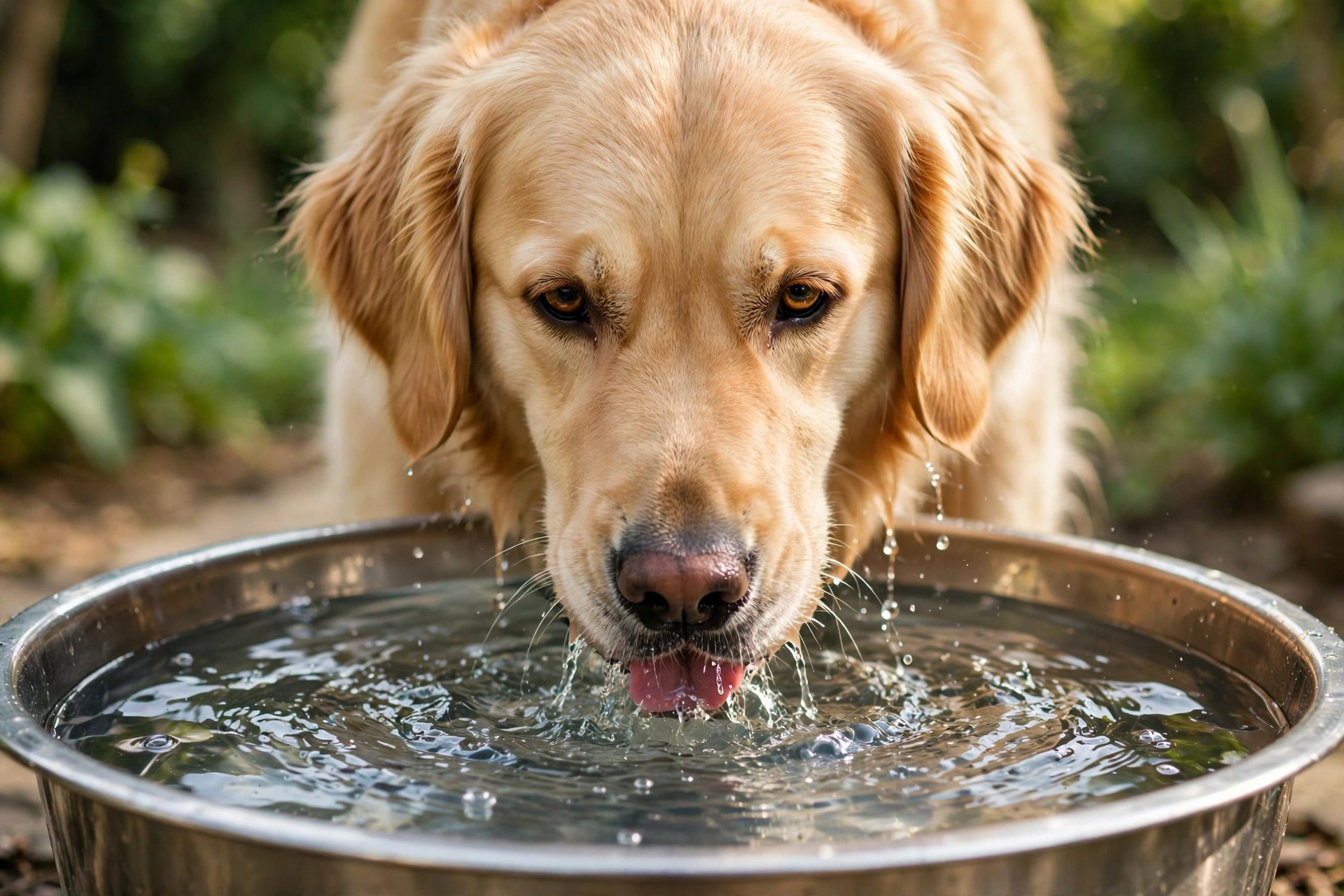

Here is the short version, because this is not a question that rewards a long wait. How long can a dog go without water? A healthy adult dog might survive around two to three days in cool, quiet conditions, but there is no safe window in that number. Dehydration starts doing damage well before the survival limit, and it does it quietly. A dog that has gone a full day without drinking needs a vet’s advice the same day, not a wait-and-see approach.
So treat the numbers below as warning markers, never as a target. No dog should ever be left to test them.
How much water does a dog actually need each day?
Before the emergency numbers, it helps to know what normal looks like. The everyday rule vets and the American Kennel Club work from is roughly one ounce of water per pound of body weight per day — about 40 to 60 milliliters per kilo. For an average pet dog living an average day, that lands here:
| Dog’s weight | Water needed per day (rough guide) |
|---|---|
| 5 lb | About 5 oz (⅔ cup) |
| 10 lb | About 10 oz (1¼ cups) |
| 25 lb | About 25 oz (about 3 cups) |
| 50 lb | About 50 oz (about 6 cups) |
| 75 lb | About 75 oz (about 9⅓ cups) |
| 100 lb | About 100 oz (12½ cups) |
It is a guide, not a prescription. A dog who has just chased a ball around a hot field needs far more. A dog who eats wet food, which is mostly water, will drink less from the bowl because a chunk of his intake arrives in his dinner. A dog on dry kibble gets almost no water from his food, since kibble is only around ten percent moisture, so the bowl has to do nearly all the work.
What matters most is the pattern for your dog. If you fill the bowl each morning and it is usually half gone by evening, the day it sits untouched is information. Owners who keep a rough eye on that level spot trouble a day earlier than owners who just top the bowl up without looking.
So, how long can a dog go without water before it gets dangerous?
This is the part people actually search for, so here it is plainly. A fit adult dog in a cool room, doing nothing, may hang on for two to three days with no water at all. That is a survival estimate, and it comes with a heavy catch: the dog is not fine for two days and then suddenly in trouble on day three. The slide starts within hours.
After roughly 24 hours without water, a healthy dog is already meaningfully dehydrated. The blood thickens, the kidneys have to work harder to conserve fluid, and the organs are under real strain. Given heat, exercise, or illness, that timeline shrinks dramatically. A small dog shut in a warm car or a dog with vomiting and diarrhea can be in genuine danger in a matter of hours, not days.
There is also a difference between a dog who can’t reach water and a dog who won’t drink. A dog refusing water that is right in front of him is telling you something is wrong with him, not with the bowl. Nausea, mouth pain, fever, and a long list of illnesses all switch off thirst. That dog needs investigating, not just a fresher bowl.
What makes a dog lose water faster?
Not every dog runs dry at the same speed. These are the situations that empty the tank quickly:
| Situation | Why it drains a dog faster |
|---|---|
| Hot weather | Dogs cool down by panting, and panting evaporates moisture with every breath |
| Hard exercise | More panting, more heat, more fluid lost through the lungs and paws |
| Vomiting | Fluid goes out and none of the replacement stays down |
| Diarrhea | The gut pulls water out of the body instead of absorbing it |
| Fever or illness | A hotter, harder-working body burns through fluid faster |
| Nursing puppies | Milk production is mostly water leaving the mother’s body |
Notice how many of these arrive together. A dog with an upset stomach on a hot day is losing water from both ends while panting it away in the middle. That is exactly the combination that turns a wait-and-see afternoon into an emergency vet run at midnight, and it is why our guides on why a dog throws up yellow and what to give a dog for diarrhea both push early vet calls. Thirst and overheating travel together, too — a dog panting hard in the heat and not settling is losing water with every breath.
What are the signs of dehydration, in the order they tend to appear?
Dehydration has a rough sequence, and knowing it means you can act at stage one instead of stage three. The AKC’s guide to dehydration warning signs and PetMD’s dehydration checks describe the same progression:
| Stage | What you are likely to see |
|---|---|
| Early | Gums feel dry or tacky instead of slippery, nose is dry, saliva turns thick and ropey, dog is a bit flatter and less keen than usual |
| Getting serious | Skin stays tented when gently lifted, urine is dark and there is less of it, appetite goes, energy drops properly, panting picks up |
| Emergency | Eyes look sunken and dry, dog is wobbly or weak, may vomit, gums feel cold or look pale, in the worst cases collapse |
Two home checks take ten seconds and are worth learning now, while your dog is well.
The gum check. Lift the lip and touch the gum above the canine tooth. On a hydrated dog it feels wet and slick, like the inside of your own cheek. If your fingertip sticks a little and the gum feels tacky, fluid is running low. You can also press gently until the gum blanches, then let go. The pink color should flood back in under two seconds. Slow return is another red flag.
The skin test. Gently lift a fold of skin over the shoulder blades, then release it. Well-hydrated skin snaps flat instantly. Dehydrated skin hesitates, or worse, stays standing in a little tent. Learn what your dog’s skin does when he is healthy, because older dogs and wrinkly breeds have less springy skin to begin with, and you need to know their normal before you can spot the change.
Which dogs run dry the fastest?
Some dogs have almost no margin for error:
- Puppies. Tiny bodies, tiny reserves. A puppy who is also off his food can slide within hours.
- Senior dogs. Older kidneys are less efficient, and older dogs often have health conditions quietly stacking the odds against them.
- Toy and small breeds. There is simply less water stored in a four-pound dog, so the same losses hit proportionally harder.
- Flat-faced breeds. Bulldogs, Pugs and French Bulldogs already struggle to cool themselves, so heat drains them faster than almost anyone.
- Sick dogs. Kidney disease, diabetes, fever and gut upsets all accelerate fluid loss or blunt thirst.
- Nursing mothers. A dam feeding a big litter is pouring water out as milk around the clock.
If your dog sits in one of those groups, tighten every timeline in this article. What is a 24-hour watch for a sturdy adult Lab is a same-morning phone call for a ten-week-old puppy.
What should you do if your dog will not drink?
Start simple, because sometimes the fix really is simple. Tip the old water out, scrub the bowl — a slimy bowl puts plenty of dogs off — and refill with fresh, cool water. Set a second bowl somewhere quiet, since a dog who feels unwell sometimes avoids the busy kitchen spot he usually drinks in. Float a few ice cubes in it. Lots of dogs who ignore a still bowl will happily crunch ice and lick at a bowl that clinks.
You can also sneak water in through food. Stir warm water into his kibble and let it soak into a gravy, or offer wet food for a day or two. A little of the water from a can of tuna in spring water, diluted well, tempts some stubborn drinkers, though go easy — it is salty, so a splash for flavor is plenty.
If you think he is already mildly dry, small and slow beats a big flood. PetMD advises offering modest amounts often rather than letting a dehydrated dog gulp a full bowl, because a stomach full of water after a dry spell often comes straight back up, and now he has lost even more fluid. Never force water into the mouth of a dog who is weak, wobbly or struggling to swallow. That dog needs a vet, not a syringe.
And if none of it works? A healthy adult dog refusing water for close to a day, or any dog refusing for half a day alongside vomiting, diarrhea, or obvious unwellness, has earned a phone call to the vet. Describe what you have seen, including the gum and skin checks. That is exactly the information they will ask for.
When does going without water become an emergency?
Skip the home remedies and get seen — vet during the day, emergency clinic at night — if you spot any of this:
- No drinking at all for 24 hours, or 12 hours in a puppy, senior, or sick dog
- Sunken eyes, cold or pale gums, or skin that stays tented
- Vomiting or diarrhea on top of not drinking
- Weakness, wobbliness, confusion, or collapse
- Heavy, relentless panting after time in the heat, or a dog found shut in a hot space
- A nursing mother who stops drinking
At the clinic, a moderately or badly dehydrated dog usually gets fluids under the skin or straight into a vein, plus tests to find out why he stopped drinking in the first place. That second part matters. Dehydration is often the symptom standing in front of kidney trouble, an infection, or a gut problem, and refilling the tank without fixing the leak only buys a day.
Conclusion
So, how long can a dog go without water? Technically, a healthy adult might survive two to three days under kind conditions. Practically, the answer that should drive your decisions is much shorter: dehydration is already doing harm by the end of the first day, and in heat, illness, or a very young or old dog, within hours.
The good news is that this is one emergency you can usually see coming. Know roughly what your dog drinks on a normal day. Check the gums and the skin over the shoulders when something feels off. Refresh the bowl, offer water in food, and pick up the phone early rather than late. Dogs are stoic about thirst in a way that does them no favors, so the watching has to come from us.
Frequently asked questions
Can a dog go overnight without water?
Yes, a healthy adult dog who has drunk normally through the evening will be perfectly fine overnight, the same way you are. The sensible habit is still to leave the bowl down and accessible rather than picking it up, so he can drink if he wakes thirsty. Puppies are the exception — a young puppy may wake in the night wanting water, especially in warm weather, and should be able to get it.
How long can a puppy go without water?
Far less than an adult, and there is no number worth memorizing because the safe answer is “not long at all.” Puppies dehydrate quickly thanks to their small size, and a puppy with diarrhea can become seriously dry in a few hours. If a puppy has not drunk for half a day, or is not drinking and is quiet, off his food, or has an upset stomach, call the vet that day. Do not wait until morning to see if he picks up.
Can dogs get enough water from their food?
Partly, and it depends entirely on the food. Wet food is typically around 70 to 80 percent water, so a dog on wet food genuinely does drink less from the bowl. Dry kibble is only about ten percent water, so a kibble-fed dog has to drink nearly all of his daily intake. Either way, food moisture is a contribution, not a replacement — every dog, whatever he eats, needs a bowl of drinking water available around the clock.
Is it normal for a dog to drink less on some days?
Small dips are normal. Dogs drink less on cool, lazy days, after a quiet day indoors, or when the routine changes. What should raise an eyebrow is a clear change that lasts: a bowl that is suddenly untouched, or the opposite — a dog emptying the bowl twice as fast as usual, which can point to problems like diabetes or kidney disease. One odd day is weather. A new pattern lasting two or three days is a vet conversation.
My dog has not drunk anything for 24 hours but seems fine. Should I still call the vet?
Yes. Call, describe how he seems, and let them decide how quickly he needs to be seen. Dogs hide dehydration well, and “seems fine” is exactly how the early stage looks from the outside — the gums and skin often tell a different story from the tail wag. A phone call costs nothing, and if there is an illness underneath the refusal to drink, finding it at the 24-hour mark is a far better outcome than finding it at the collapse mark.
Related Articles


[…] How Long Can a Dog Go Without Water? The Honest Answer […]
[…] How Long Can a Dog Go Without Water? The Honest Answer […]