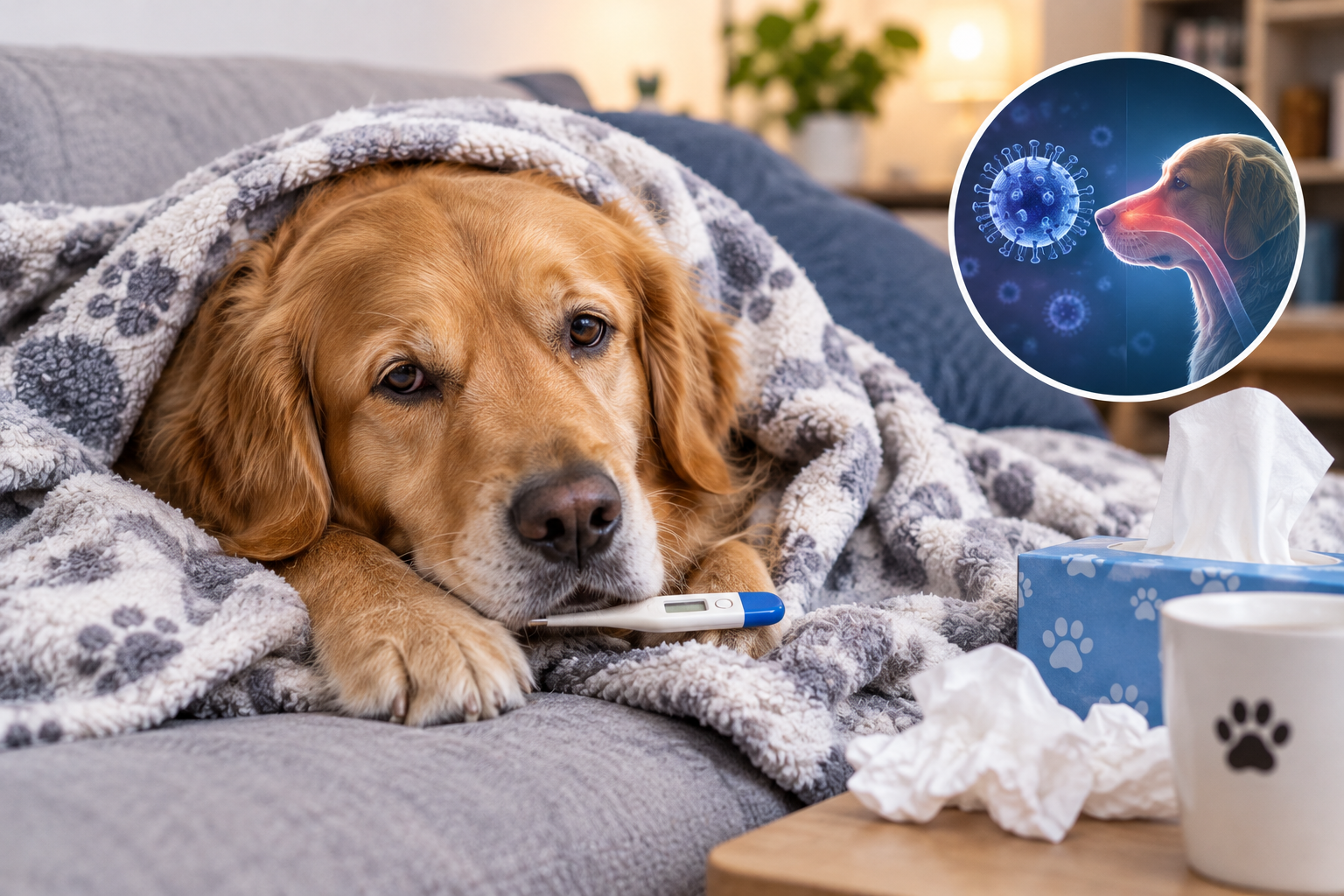
Yes, dogs can get colds. They don’t catch the human common cold, but they get their own version: a mild infection of the nose and throat that causes sneezing, a runny nose, watery eyes, and often a dry cough. Most healthy adult dogs get over it in one to two weeks with rest at home.
The catch is that a dog’s cold comes from a different group of germs than yours, and a few of those germs can turn serious. Below you’ll find what a dog cold really is, how to spot one, how to care for your dog at home, and the signs that mean it’s time to call the vet.
What is a cold in a dog?
A dog cold is an infection of the upper airway: the nose, throat, and windpipe. Vets call it canine infectious respiratory disease complex, or CIRDC. The word “complex” is there because no single germ causes it. At least nine different viruses and bacteria can do it, and a sick dog often has two or three at once.
You’ve probably heard the name kennel cough. That’s the same illness family. It got the nickname because it spreads so fast anywhere dogs are kept close together.
Here are the germs most often behind a dog’s cold:
| Germ | Type | What to know |
| Canine parainfluenza virus | Virus | One of the most common causes. Usually mild. |
| Bordetella bronchiseptica | Bacteria | Behind the classic honking cough. |
| Canine adenovirus type 2 | Virus | Can survive on surfaces for weeks to months. |
| Canine respiratory coronavirus | Virus | A dog-only virus, not the one that causes COVID-19. |
| Canine influenza (H3N8, H3N2) | Virus | Dog flu. Higher fever and a bigger risk of pneumonia. |
| Mycoplasma | Bacteria | Often joins in alongside a virus. |
| Canine distemper virus | Virus | Serious. Can spread to the eyes, gut, and brain. |
Most of these cause a short, mild illness. Dog flu and distemper are the two that can make a dog truly sick, which is why the core puppy shots matter so much.
Can dogs catch a cold from humans?
No. The common cold in people is mostly caused by rhinoviruses, and those are built to infect human cells. They don’t make dogs sick. If you’re stuck on the couch with a stuffy nose, you can still cuddle your dog without worry.
It works the other way too. Your dog’s cold germs are dog germs, and healthy people don’t catch them. The one small exception is Bordetella bronchiseptica, which can very rarely infect people with a weak immune system. If someone at home is having chemotherapy or has a condition that lowers immunity, have them wash their hands after touching a coughing dog.
There’s one more rare case worth knowing. A small number of pet dogs have picked up the virus that causes COVID-19 from their owners. When it happens, the illness in dogs is usually mild or causes no signs at all.
What are the symptoms of a cold in dogs?
The most common sign is a dry, harsh cough that sounds a bit like a goose honk. Many dogs finish a coughing fit with a gag or retch and bring up a little white foam, which owners often mistake for vomiting.
Other signs include:
- Sneezing
- A clear, watery runny nose
- Watery or slightly goopy eyes
- Being a little more tired than usual
- Eating a bit less
- A low fever (a dog’s normal temperature is about 101 to 102.5°F)
Plenty of dogs with a cold act almost normal apart from the cough. They still want to play and still finish their dinner. The cough often gets worse after exercise, excitement, or pulling against a collar, because all three put pressure on an already sore windpipe.
How do dogs catch colds?
Dogs catch colds from other dogs. The germs travel in the tiny droplets that fly out when a dog coughs or sneezes. They also spread through nose-to-nose greetings and shared water bowls, toys, and bedding.
Signs usually show up 3 to 10 days after your dog was exposed. That gap is part of what makes these germs so good at spreading. A dog can pass the infection on before it starts coughing, and some dogs carry it without ever looking sick.
The places with the highest risk are wherever many dogs share air and space:
- Boarding kennels and doggy daycare
- Dog parks
- Grooming salons
- Shelters and rescues
- Training classes and dog shows
Cold weather on its own doesn’t give a dog a cold. Germs do. Winter can still play a part, though, since dogs spend more time indoors together and dry heated air can irritate their noses and throats.
Some dogs are more likely to get sick, or to get sicker. Puppies and senior dogs have weaker defenses. Flat-faced breeds such as pugs, bulldogs, and French bulldogs have narrow airways that make breathing harder when they’re congested. Dogs with heart or lung disease, and dogs that aren’t fully vaccinated, are also at higher risk.
How long does a dog cold last?
Most dogs recover in 7 to 10 days. The cough can hang around a little longer, sometimes up to three weeks, as the windpipe heals. That’s normal as long as your dog keeps getting better, not worse.
Your dog can still spread germs for a while after the coughing stops. Keep them away from other dogs until they’ve been symptom-free for at least a week, and ask your vet how long to wait before going back to daycare or boarding. Many kennels have their own rules on this.
Is it a cold or something more serious?
Not every cough or sneeze is a cold. A few other problems can look similar, and some of them need treatment:
- Heart disease: a soft cough that’s worse at night or when lying down, often in older dogs.
- Collapsing trachea: a honking cough in small breeds like Yorkies and Pomeranians, often set off by excitement.
- Something stuck in the nose: sudden, violent sneezing and pawing at the face, often after a walk through tall grass.
- Allergies: sneezing and runny eyes together with itchy skin or paws.
- Nasal tumors or tooth infections: discharge from one nostril only, sometimes with blood, mostly in older dogs.
This quick table helps you sort a mild cold from something that needs a vet:
| Sign | Probably a mild cold | Call your vet |
| Nasal discharge | Clear and watery | Thick yellow or green, or bloody |
| Energy | A little tired but still interested | Very sluggish, won’t get up |
| Appetite | Eating, maybe a bit less | Skipping meals for more than a day |
| Breathing | Normal at rest | Fast, hard, or noisy at rest |
| How long | Improving within a week | Lasting past 10 days or getting worse |
How do you care for a dog with a cold at home?
A healthy adult dog with mild signs usually needs rest and a little extra care, not medicine. These steps help your dog feel better and heal faster:
- Let them rest. Swap long walks and play sessions for short, calm trips outside to go to the bathroom.
- Use a harness instead of a collar. A collar presses on the windpipe and can set off coughing fits.
- Add moisture to the air. Run a humidifier near your dog’s bed, or sit with your dog in the bathroom for 10 to 15 minutes while a hot shower runs. The steam helps loosen mucus.
- Keep them eating and drinking. A stuffy nose dulls smell, which can kill appetite. Warming wet food for a few seconds makes it smell stronger. A splash of plain, low-sodium broth with no onion or garlic can tempt a dog to drink.
- Keep the face clean. Gently wipe the nose and eyes with a soft, damp cloth a few times a day.
- Keep them away from other dogs. Skip the dog park and daycare, and wash bowls, toys, and bedding in hot water.
- Watch and take notes. Check your dog’s appetite, energy, and breathing each day so you can spot changes early.
Tip: Call your vet before you show up with a coughing dog. Many clinics will have you wait in the car or use a side door so other dogs in the waiting room don’t catch it.
Can you give a dog human cold medicine?
No. Human cold and flu medicines are one of the most common ways dogs get poisoned at home. Dogs process drugs differently than people, so a normal human dose can be dangerous or even deadly for them.
Some of the riskiest ingredients are:
- Acetaminophen (Tylenol): can damage the liver and harm red blood cells, so less oxygen reaches the body.
- Ibuprofen and naproxen (Advil, Aleve): can cause stomach ulcers, bleeding, and kidney damage.
- Pseudoephedrine (a decongestant): can cause a racing heart, high blood pressure, shaking, seizures, and death.
- Xylitol: a sweetener found in some syrups and chewable tablets that can crash a dog’s blood sugar and damage the liver.
If your dog gets into any cold medicine, call your vet or a pet poison hotline right away. The Pet Poison Helpline’s guide to cold medicines explains the risks of each ingredient in more detail. And skip leftover antibiotics too. Most dog colds are viral, so antibiotics won’t help, and your vet will only prescribe them if a bacterial infection or pneumonia is likely.
When should you take your dog to the vet?
Call your vet if your dog has any of these signs:
- Fast, labored, or noisy breathing while resting
- Blue, purple, or gray gums or tongue (this is an emergency)
- Thick yellow or green nasal discharge along with fever or low energy
- Not eating for more than a day
- A cough that lasts longer than 10 days or keeps getting worse
- Any cold signs in a puppy, a senior dog, a flat-faced breed, or a dog with heart or lung problems
These can point to pneumonia, dog flu, or another illness that needs real treatment. The University of Tennessee College of Veterinary Medicine also advises going to an emergency clinic right away if breathing gets worse or the tongue turns dark blue or purple.
At the visit, your vet will listen to the chest and check your dog’s temperature. For a simple case, they may suggest a cough medicine made for dogs and more rest. If your dog seems very sick, they may take chest X-rays or swab the nose and throat to find out exactly which germ is involved.
How can you prevent colds in dogs?
Vaccines are the best protection. The core puppy and adult shots (often called DHPP) already cover three of the germs behind dog colds: distemper, adenovirus, and parainfluenza.
Two extra vaccines are worth asking about if your dog mixes with other dogs a lot:
- Bordetella vaccine: given as nose drops, by mouth, or as a shot. Most boarding kennels, daycares, and groomers require it.
- Canine influenza vaccine: covers both strains of dog flu (H3N8 and H3N2). Useful for dogs that board, travel, or go to shows.
No vaccine blocks every germ in the mix, so a vaccinated dog can still catch a cold. The difference is that it’s usually milder and shorter.
A few simple habits lower the risk even more. Bring your own water bowl to parks and events. Stay away from places with a known outbreak. Keep a coughing dog home, and ask your daycare or kennel how they handle sick dogs before you book.
Conclusion
Dogs do get colds, just not from you. A dog cold is a mild infection spread from dog to dog, and most healthy adults recover in 7 to 10 days with rest, moist air, good food, and time away from other dogs. Never give human cold medicine.
Call your vet if breathing gets hard, your dog stops eating, the discharge turns thick and colored, or the cough lasts past 10 days. Keeping vaccines up to date is the easiest way to keep colds rare and mild.
Frequently asked questions
Can a dog’s cold go away on its own?
Yes. Most mild dog colds clear up without medicine in 7 to 10 days. Rest, moist air, and good food help. If your dog gets worse, stops eating, or still coughs after 10 days, see your vet.
Is kennel cough the same as a dog cold?
Mostly, yes. Both describe an infection of a dog’s nose, throat, and windpipe caused by the same group of viruses and bacteria. “Kennel cough” usually refers to cases with a strong honking cough.
Can my dog give my cat a cold?
Usually not. Most dog cold germs only infect dogs. Bordetella bronchiseptica is the exception, since it can also infect cats, so keep a coughing dog apart from your cat and wash shared bedding.
Can cold weather give my dog a cold?
No. Colds come from germs, not low temperatures. Winter can raise the risk a little because dogs spend more time indoors together and dry heated air can irritate their airways.
Should I walk my dog when it has a cold?
Yes, but keep walks short and calm. Use a harness instead of a collar to avoid pressing on the windpipe, and stay away from other dogs until your dog has been symptom-free for at least a week.
Related Articles
Can I Give My Dog Benadryl? Safe Dose and Risks
One thought on “Can Dogs Get Colds? Symptoms, Home Care & When to Worry”