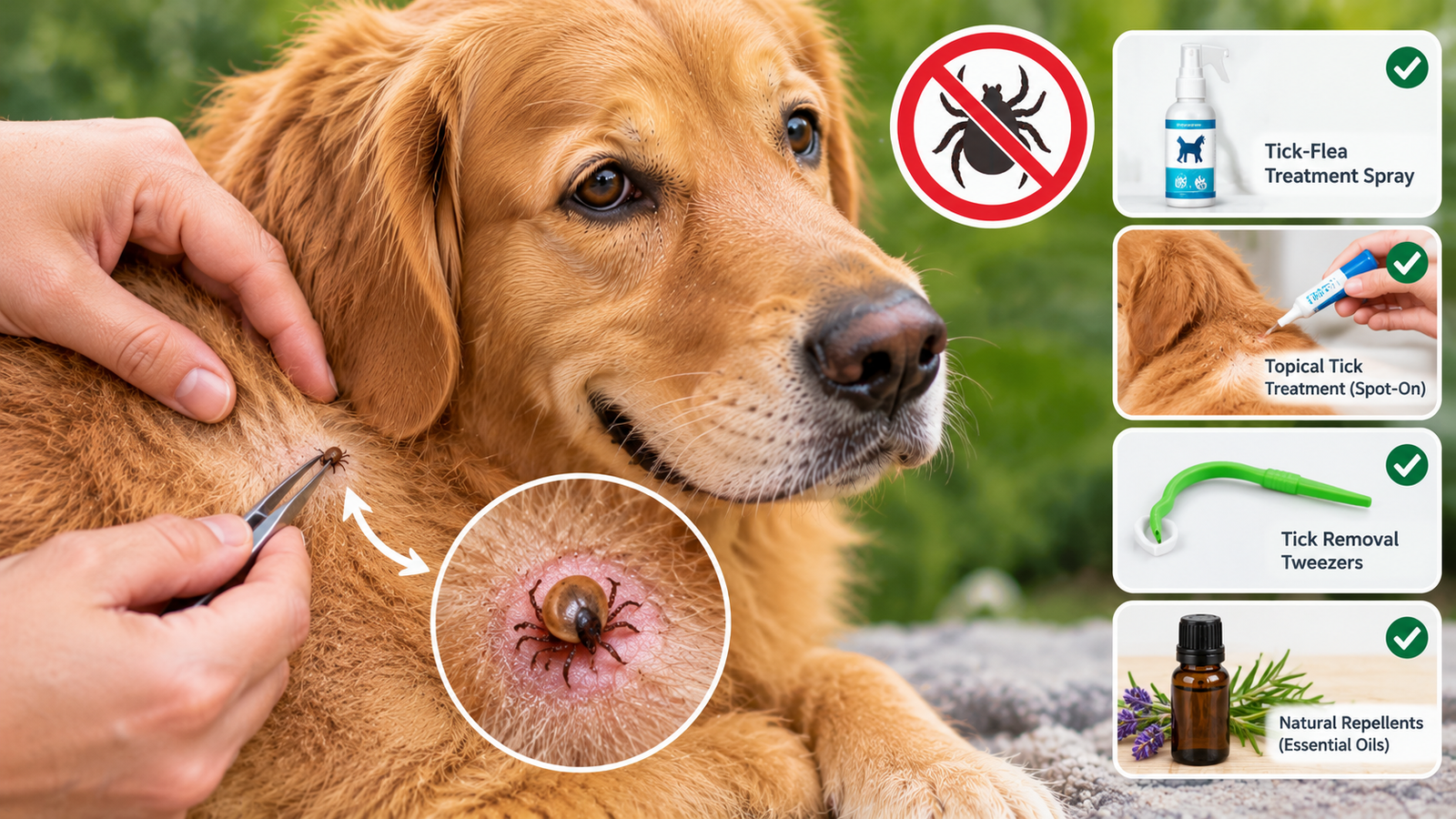

The quickest safe way to get an attached tick off your dog is to remove it with fine-tipped tweezers, gripping close to the skin and pulling steadily upward. A veterinarian-approved tick treatment can kill ticks, but it may not work instantly. Avoid home remedies such as heat, oil, or nail polish, which can irritate the tick or injure your dog.
What kills ticks on dogs instantly?
If a tick is attached to your dog, the quickest safe solution is to remove it with clean, fine-tipped tweezers. Grasp the tick close to your dog’s skin and pull steadily upward. A tick-killing medicine may kill ticks after treatment, but the speed depends on the product and tick species, so do not assume every treatment works instantly.
If you see a tick crawling through your dog’s fur rather than attached, pick it up with tweezers or a tissue and place it in a sealed container or alcohol. Avoid crushing it with bare fingers. After dealing with the visible tick, check your dog carefully for others.
The key difference is simple: physical removal gets an attached tick off your dog right away, while preventive products help kill or repel ticks over time. If you find many ticks, your dog is very young or unwell, or you are unsure which product is safe, contact a veterinarian for advice.
How do you remove an attached tick safely?
You do not need to wait for a tick to die before removing it. Prompt removal reduces the time it stays attached and helps avoid skin irritation and potential exposure to tick-borne infections.
- Part the fur. Use good lighting and gently separate the hair so you can see where the tick’s body meets the skin.
- Grip close to the skin. Use clean, fine-tipped tweezers. Hold the tick as near to the skin as possible without pinching your dog.
- Pull straight out. Apply steady, even pressure. Do not twist, jerk, squeeze the tick’s swollen body, or yank suddenly.
- Dispose of the tick. Put it in a sealed container, wrap it tightly in tape, or place it in alcohol. Do not crush it between your fingers.
- Clean the area. Wash your hands and clean the bite site with soap and water or a suitable pet-safe antiseptic recommended by your veterinarian.
If a tiny part of the tick’s mouth remains and cannot be removed easily with tweezers, do not dig deeply into your dog’s skin. Keep the area clean and ask a veterinarian if it becomes swollen, painful, or inflamed. The U.S. FDA’s tick-removal instructions explain the same basic approach: grasp close to the skin and pull with steady pressure.
Which tick treatments work quickly on dogs?
Veterinary-approved tick products can kill ticks and help prevent new infestations. They come in several forms, including oral chewables or tablets, topical liquids, collars, and some shampoos or sprays. The right choice depends on your dog’s age, weight, health, local tick risks, and any other medicines they take.
Oral treatments work through the dog’s system and can kill ticks after they attach and feed. Some products begin working within hours, but the timing varies by active ingredient and tick species. They are not a reason to leave a tick attached when you can safely remove it.
Topical treatments are applied to the skin, usually at a labeled spot. Depending on the product, they may kill ticks through contact or after the tick contacts or feeds on the treated animal. Follow the label exactly, including instructions about bathing and how long to keep children or other pets away from the application site.
Tick collars can provide longer-lasting protection when correctly fitted and used according to the label. They do not necessarily kill every tick immediately, and the time needed to work varies.
Shampoos and sprays may help in some situations, but they are not interchangeable with long-lasting prevention. Use only products labeled for dogs and for your dog’s age and weight. Never combine multiple tick products unless your veterinarian confirms that the combination is safe.
The FDA explains how to choose and use flea and tick products safely. Ask your veterinarian which active ingredient and format fits your dog, especially if your pet has a seizure history, is pregnant or nursing, or is taking other medication.
What should you never put on a tick?
Do not try to force a tick to detach by coating it with petroleum jelly, nail polish, oil, or other household substances. Do not burn it with a match, lighter, or heated object. These methods waste time and may irritate the tick or injure your dog’s skin. Pulling it out carefully is safer than waiting for a home remedy to work.
Avoid using gasoline, kerosene, household cleaners, disinfectants, or concentrated essential oils on your dog. These substances can irritate skin or cause poisoning if licked. Do not spray a dog with insecticide intended for the yard, garden, or home.
Also, never use a flea or tick product made for another species unless the label specifically says it is safe for dogs. Some products intended for dogs can be highly toxic to cats, so keep treated dogs away from cats as directed on the label. Do not guess a dose based on a different brand or your dog’s previous weight.
If you have already applied a questionable product, stop using it and contact a veterinarian or animal poison service for instructions. Keep the packaging so you can share the product name and active ingredients.
What should you do after removing a tick?
After removing the tick, clean the bite area and wash your hands. Then check your dog’s entire body, because several ticks can attach at once and small ones can be difficult to spot. Look around the ears and eyelids, under the collar, beneath the front legs, between the toes, around the groin, between the back legs, and under the tail.
Watch the bite site for increasing redness, swelling, discharge, or tenderness. A small mark may occur after a bite, but worsening irritation should be checked by a veterinarian. If possible, note the date you found the tick and where your dog may have picked it up. You can keep a photo of the tick if you need help identifying it.
Monitor your dog for changes in behavior or health over the following days and weeks. Tick-borne illness can cause signs such as fever, unusual tiredness, reduced appetite, stiffness, limping, or swollen joints. The signs and timing differ by disease, and a dog may not show symptoms immediately.
Call your veterinarian if your dog becomes unwell after a tick bite, even if you removed the tick successfully. Seek urgent veterinary care for collapse, severe weakness, trouble breathing, pale gums, or sudden difficulty walking. Removing the tick is important, but it cannot guarantee that infection will not occur.
Ticks can be hard to see when a dog has a thick coat, so work in small sections instead of checking only the area where you first spotted one. If your dog has been outside in tick habitat, repeat the check later that day. A quick glance over the back is not enough to find ticks tucked into folds of skin or around the ears.
When should you call a veterinarian?
Get veterinary help if your dog has dozens of ticks, a tick is lodged in a sensitive area such as the eyelid or inside the ear, or your dog will not stay still enough for safe removal. A veterinarian can remove difficult ticks and check for skin damage or signs of illness.
Contact a vet promptly if your dog develops fever, weakness, poor appetite, lameness, swollen joints, unusual bruising, dark urine, or other new symptoms after tick exposure. Do not give human painkillers or leftover antibiotics unless a veterinarian specifically instructs you to do so.
Ask for professional advice before choosing a tick medicine for a puppy, a very small dog, a senior dog with health problems, or a pet that has had seizures. The FDA notes that a class of products called isoxazolines has been associated with neurological side effects, including tremors, poor coordination, and seizures in some dogs and cats. These products are safe and effective for many pets, but a veterinarian can help assess whether one is suitable for your dog.
If a product causes vomiting, heavy drooling, shaking, unsteadiness, or seizures, contact a veterinarian immediately and provide the product packaging.
How can you stop ticks from coming back?
A reliable prevention plan is more effective than trying to kill each tick after it attaches. Use a veterinarian-approved product on the schedule shown on its label. Depending on the product, protection may last weeks or longer. Do not shorten or extend the interval without professional guidance.
Check your dog daily after walks, hikes, time in long grass, or visits to places where animals gather. Run your fingers through the coat and inspect the common hiding spots, especially the ears, collar area, armpits, toes, groin, and tail. Brush long-haired dogs carefully so ticks are easier to find.
Keep grass trimmed, remove leaf litter and brush near areas where your dog rests, and discourage wildlife from gathering close to the home where practical. After outdoor time, check bedding and the areas where your dog lies. If you find repeated ticks indoors or on several pets, ask a veterinarian or qualified pest-control professional about a safe plan for the home and yard.
The CDC recommends checking pets that go outdoors every day and removing ticks as soon as they are found. Its pet tick-prevention guidance also explains where to look and why regular checks matter.
Ticks can be hard to see when a dog has a thick coat, so work in small sections instead of checking only the area where you first spotted one. If your dog has been outside in tick habitat, repeat the check later that day. A quick glance over the back is not enough to find ticks tucked into folds of skin or around the ears.
How quickly a product works also depends on whether it is designed to kill ticks already on the dog, prevent new ticks from surviving, or do both. Read the label for the specific tick species covered and the expected time to kill. If ticks remain attached after the product’s stated treatment window, or you keep finding new ones, call your veterinarian rather than applying an extra dose early.
Do not use a dog’s size or breed as the only guide to dosing. Weigh your dog if possible and follow the exact weight range on the package. If more than one pet lives in the home, choose separate products for each animal and follow all label directions about contact between pets. A prevention routine works best when every pet in the household receives appropriate protection.
Conclusion
The fastest safe way to deal with an attached tick is to remove it promptly with fine-tipped tweezers, pulling straight out with steady pressure. Veterinary-approved tick medicines can help kill ticks and prevent future infestations, but their speed varies by product.
Avoid heat, oils, nail polish, and harsh chemicals, then clean the bite site and check your dog for more ticks. Contact a veterinarian if your dog becomes unwell or if you are unsure which treatment is safe.
Frequently asked questions
Can vinegar kill ticks on dogs instantly?
No. Vinegar is not a reliable or recommended way to kill or remove an attached tick. Use fine-tipped tweezers to remove it promptly, then ask your veterinarian about a suitable tick-prevention product.
Does rubbing alcohol kill ticks on dogs?
Do not pour rubbing alcohol onto a tick attached to your dog. Remove the tick first. Alcohol can be used to dispose of a removed tick in a container, but it should not be used as a substitute for proper removal.
How fast do tick pills work on dogs?
The timing depends on the product’s active ingredient and the tick species. Some oral products begin killing ticks within hours, but not all work at the same speed. Follow the label and your veterinarian’s instructions.
Can I use Dawn dish soap to kill ticks on my dog?
Dish soap is not a dependable tick treatment and should not replace a product labeled for dogs. Remove attached ticks with tweezers and use a veterinarian-approved preventive suited to your dog’s age and weight.
What if the tick’s head stays in my dog’s skin?
If a small mouthpart remains, remove it with clean tweezers only if it comes away easily. Do not dig into the skin. Keep the area clean and contact your veterinarian if it becomes swollen, painful, or infected.
Related Articles
Why Does My Dog Keep Shaking His Head? 7 Causes
Why Is My Dog Throwing Up Yellow? Causes & Care



[…] just not himself. If you live in tick country, this belongs on the list, and our guide on what kills ticks on dogs instantly covers safe removal if you find one […]
[…] but these three behave very differently, and the differences decide what you do next. Our guide to what kills ticks on dogs instantly covers the tick side of the parasite family. For the itchy trio, here’s the quick […]