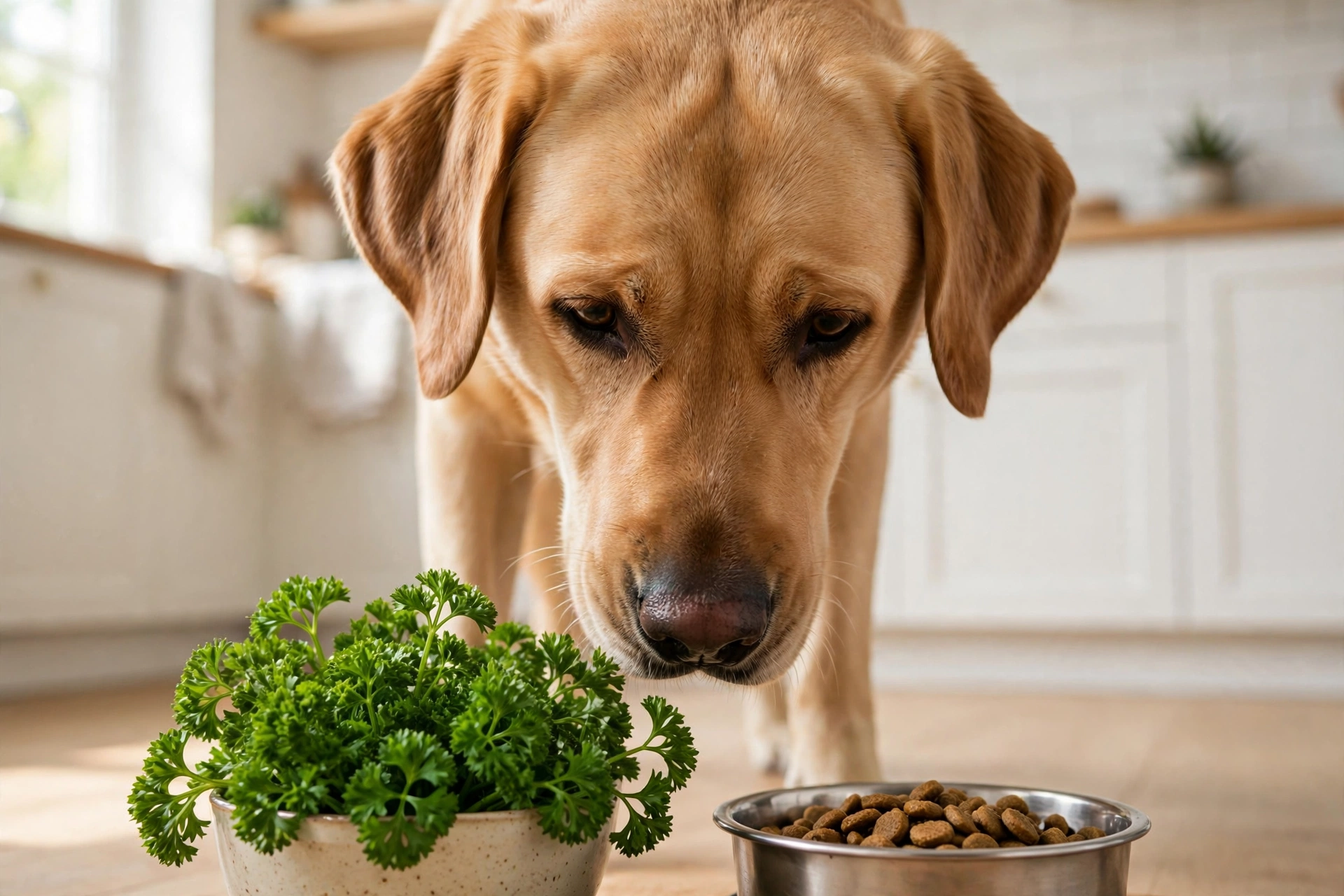

Parsley is the garnish nobody eats. It sits on the side of your plate looking decorative, and at some point most dog owners have wondered whether the sprig they’re about to throw away could go in the dog’s bowl instead.
So, can dogs eat parsley? Yes — as long as it’s the ordinary culinary herb from the grocery store or your kitchen garden, and as long as you keep it to a sprinkle. Curly and flat-leaf parsley are fine for dogs in small amounts. The catch is that there’s a completely different plant also called parsley, spring parsley, and that one is genuinely toxic to dogs. Knowing which plant you’re holding is the whole game here.
Here’s how to tell them apart, what the safe kind does for your dog, how much to give, and the forms of parsley that should never go near a dog’s bowl.
Can dogs eat parsley? The short answer
Yes, dogs can eat culinary parsley. The frilly curly-leaf kind and the flat-leaf (Italian) kind are the same species, Petroselinum crispum, and neither is a problem in the small amounts you’d use as a garnish. The American Kennel Club considers curly parsley the safest pick of the two and advises keeping portions small with either.
Small is the word that matters. Parsley is a garnish for dogs just as much as it is for people. A pinch of chopped leaves over dinner a few times a week is a healthy little extra. A dog turned loose to graze on a whole parsley patch is a different story, and we’ll get to why.
Which parsley is safe for dogs, and which one is toxic?
Three plants share the parsley name, and they are not interchangeable. This is where almost all the confusion online comes from, so it’s worth slowing down for thirty seconds.
| Plant | What it is | Safe for dogs? |
|---|---|---|
| Curly parsley | The frilly garnish herb, Petroselinum crispum | Yes — the safest choice, in small amounts |
| Flat-leaf (Italian) parsley | The stronger-flavored cooking herb, same species | Yes in sprinkle-sized amounts, but go easier — it carries more of the compounds that cause trouble in excess |
| Spring parsley | A wild plant, Cymopterus watsonii — not a kitchen herb at all | No — toxic to dogs |
Spring parsley isn’t something you’ll find in a produce aisle. It’s a wild plant in the same botanical family, and it shares nothing with the herb in your crisper drawer except a name and a vague family resemblance. The ASPCA lists spring parsley as toxic to dogs, cats and horses, and the problem compounds are called furanocoumarins.
Why does this matter to a normal dog owner who has never heard of Cymopterus watsonii? Because dogs don’t check labels. If you live in an area where spring parsley grows wild, or your dog is the type to sample greenery on hikes and in unfamiliar yards, the risk isn’t your garnish — it’s a look-alike plant eaten in quantity outdoors. Back home, if you grow herbs, buy and plant culinary parsley from a labeled source, and don’t let your dog treat any unidentified garden green as a salad bar.
What makes too much parsley a problem?
Even the safe parsley has a limit, and it’s the same family of compounds behind it: furanocoumarins. In sprinkle-sized amounts they’re neither here nor there. In large amounts, they can make a dog’s skin unusually sensitive to sunlight, a reaction called photosensitization, which shows up like sunburn or irritated, inflamed skin. That’s the effect the ASPCA flags for spring parsley, and culinary parsley contains smaller amounts of the same compounds — which is exactly why the dose is what separates “healthy garnish” from “vet visit.”
Too much culinary parsley can also mean:
- An upset stomach. Vomiting and loose stools are the usual first signs that a dog got more herb than it needed. If that’s where you are, our guide on what to give a dog for diarrhea covers the home care basics while you keep an eye on things.
- Extra urination. Parsley is a mild diuretic, so a lot of it can have your dog asking for the door more often and drinking more to keep up.
- Skin irritation. Redness, itching or scratching after a big serving plus time in the sun is the photosensitivity reaction, and it’s a vet call.
The allergy possibility is boring but real, too. Any new food can disagree with an individual dog, which is why the first serving should always be a tiny one.
What are the benefits of parsley for dogs?
There’s a reason parsley keeps turning up in dental chews and fancy dog treats. For a leaf, it packs a respectable amount of nutrition.
| Nutrient in parsley | What it supports |
|---|---|
| Vitamin A | Vision and the immune system |
| Vitamin C | Immune support |
| Vitamin K | Healthy blood clotting and liver health |
| Folate | Cell growth and production of healthy blood cells |
| Antioxidants (including apigenin and luteolin) | Protection against everyday cell damage |
| Chlorophyll | The compound behind parsley’s breath-freshening reputation |
The AKC’s guide to dog-safe superfoods points out the same vitamin lineup and notes that parsley’s antioxidants support kidney and urinary health. The mild diuretic effect plays a part there too, helping the body flush fluids through the urinary tract.
Then there’s the breath. Parsley won’t fix breath caused by rotten teeth — nothing sprinkled on kibble will — but its chlorophyll and mild antimicrobial properties genuinely take the edge off ordinary dog breath. It’s a garnish, not a cure, and as long as you treat it that way it’s a pleasant bonus.
How much parsley can a dog have?
Think garnish, not side dish. A commonly used guide is roughly a teaspoon of chopped fresh parsley for every 20 pounds of body weight, given a few times a week rather than every day. Spread out by dog size, it looks like this:
| Dog size | Chopped fresh parsley per serving |
|---|---|
| Small (under 20 lb) | A pinch to ½ teaspoon |
| Medium (20–50 lb) | About 1 teaspoon |
| Large (50–90 lb) | 1–2 teaspoons |
| Extra-large (90 lb and up) | Up to 1 tablespoon |
Dried parsley is more concentrated by volume, so use noticeably less of it — a light shake rather than a measured spoon. And parsley blended into a commercial treat or dental chew is already portioned for you, which is one reason those products are the easiest way to offer it.
Start below these amounts the first time. A pinch, a normal meal, and a day of watching the litter box and the back door will tell you everything about how your particular dog handles it.
What’s the best way to serve parsley to a dog?
Keep it simple and fresh:
- Chop it fine and sprinkle it over food. This is the standard method for a reason — the pieces mix into the meal instead of being picked out and dropped on the floor.
- Wash it first. Grocery and garden parsley can carry dirt, grit and spray residue. A rinse and a pat dry takes ten seconds.
- Bake it into homemade treats. Parsley holds up fine in the oven, so it works well in DIY biscuits, especially paired with a little mint for the breath effect.
- Stir a pinch into warm water or broth poured over kibble, if your dog tends to nose dry leaves aside.
Skip the stems in big chunks — not because they’re dangerous, but because chopped leaves are easier to digest and less likely to be rejected by a picky eater.
When is parsley a bad idea for a dog?
Four situations call for leaving the parsley in the crisper.
Parsley essential oil and extracts. The herb on food and the concentrated oil in a dropper bottle are not the same thing at all. Parsley oil and supplement-style extracts concentrate the active compounds enormously, and that concentrated form can irritate the skin and strain the liver and kidneys. Never add parsley essential oil to your dog’s food or skin, and be just as careful with any product containing parsley seed, where those compounds are strongest.
Pregnant dogs. Parsley has a long history as an herb that can stimulate the uterus, particularly in its concentrated forms, and the standard advice is to keep it off the menu entirely for a dog that’s expecting puppies. There’s no garnish benefit worth gambling a pregnancy on.
Dogs with kidney trouble. Because parsley is a diuretic and contains oxalates, vets generally advise skipping it for dogs with existing kidney problems unless your own vet says otherwise.
Any dog, in large amounts. A dog that raids the herb garden and eats a whole plant has gone well past garnish territory. Watch for vomiting, diarrhea, unusual thirst and urination, itchiness or red skin after sun exposure, and general lethargy. If several of those show up, or your dog seems genuinely unwell, call your vet — and if you suspect the plant eaten was anything other than kitchen parsley, the ASPCA Poison Control line (888-426-4435) is the right call. Checking whether your dog is running a temperature is a useful first step too; our guide on how to tell if a dog has a fever walks through it.
Conclusion
Can dogs eat parsley? The kitchen herb, yes — curly parsley first choice, flat-leaf in smaller sprinkles, always in garnish-sized amounts a few times a week. The wild plant that shares its name, spring parsley, is a hard no, and so are parsley essential oils and concentrated extracts at any dose.
Treat parsley like what it is: a small, genuinely nutritious extra with vitamins A, C and K, a mild urinary benefit and a welcome effect on dog breath. Identify the plant, keep the portion tiny, and it’s one of the easiest healthy add-ons in the whole crisper drawer.
Frequently asked questions
Can dogs eat parsley every day?
It’s better as a few-times-a-week extra than a daily habit. Daily feeding isn’t necessary for the benefits, and because parsley is a diuretic with compounds that add up in large amounts, an everyday spoonful is how a harmless garnish turns into stomach upset and extra trips outside. Sprinkle it on two or three meals a week and you’ve got all the upside.
Can dogs eat dried parsley?
Yes, and many owners find the dried herb easier — no chopping, no wilting bunch going slimy in the fridge. It’s more concentrated than fresh, so use roughly half as much, and check the label on any seasoning blend: parsley flakes are fine, but blends that also contain garlic or onion powder are not safe for dogs.
Does parsley really help a dog’s bad breath?
Partly. The chlorophyll in parsley and its mild antimicrobial action can noticeably soften ordinary food-breath, which is why dental chews so often include it. What it won’t do is fix breath caused by dental disease, and truly foul breath that shows up suddenly is a sign to look in your dog’s mouth or book the vet, not to reach for a bigger handful of herbs.
Can puppies eat parsley?
A tiny pinch of chopped curly parsley won’t hurt most puppies, but there’s no rush. Young stomachs are easily tipped into loose stools by new flavors, and a puppy gets everything it needs from a complete puppy food. If you want to try it, wait until the puppy is weaned and eating solids comfortably, start with a few chopped leaves, and stop at the first sign of a messy stool.
What should I do if my dog eats parsley from the garden?
First, work out what the plant actually was. If it’s culinary parsley you planted and can identify with confidence, a stolen mouthful or two usually means nothing worse than possible mild stomach upset — keep an eye out and let your vet know if vomiting or diarrhea sticks around. If the plant is unidentified, or it could be spring parsley or another wild look-alike, don’t wait and see: call your vet or the ASPCA Poison Control line (888-426-4435) and describe the plant as precisely as you can.
Related Articles