
One minute your dog is charging around the yard, and the next he’s walking like a table with one short leg. If you’re asking yourself, “Why is my dog limping?” the honest answer is that a limp is a symptom, not a diagnosis. It simply means something in the paw, leg, or occasionally the spine hurts enough that your dog is shifting his weight off it.
Here’s the reassuring part: a lot of sudden limps start with something small and fixable, like a thorn in a pad or a nail that caught on the deck. And there’s a calm, sensible order to work in. Start with the paw, then move up the leg, then decide whether this is a rest-and-watch situation or a same-day vet visit. This guide walks you through that check, the causes vets see most often, and the warning signs that should never wait until tomorrow.
Why is my dog limping? Start with the paw check
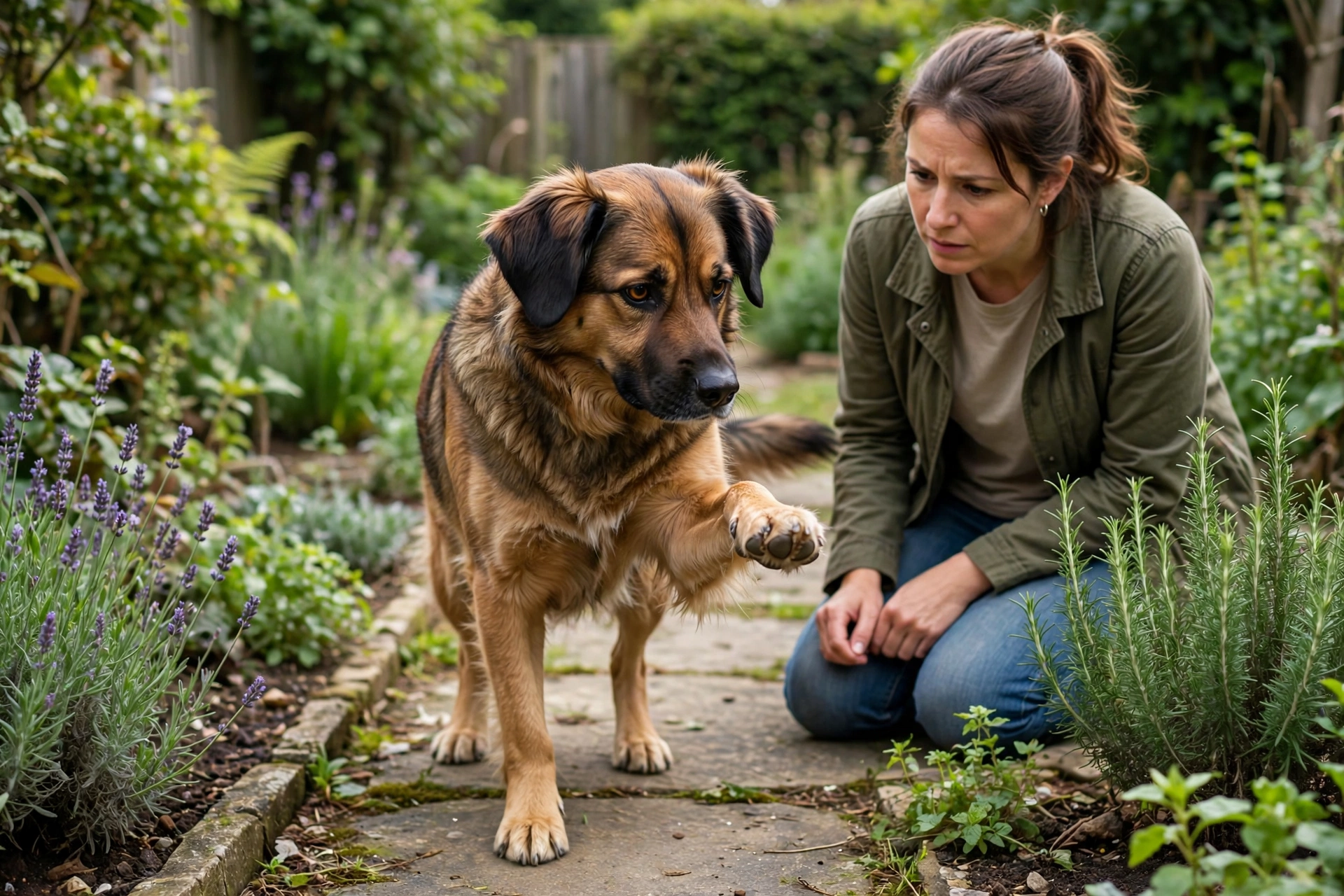
Before you imagine torn ligaments and X-ray bills, look at the paw. The paw is the only part of your dog that touches the ground unprotected, and it’s where a surprising number of limps begin. Do this check somewhere quiet, with good light, and keep your voice boring. If a friend or family member can gently hold and talk to your dog while you look, even better.
Work through it in this order:
- Between the toes. Spread the toes gently and look for a thorn, a piece of grit or glass, a grass seed, or a small stone wedged in tight. Check the webbing too, which can get red and sore.
- The pads. Look for cuts, cracks, a flap of torn pad, or a pad that looks burned or blistered after hot pavement or a long hike on rough ground.
- The nails. One broken, split, or torn nail can make a dog act like the whole leg is ruined. Check whether any nail is bent, bleeding, or much shorter than its neighbors.
- Anything stuck or wrapped. Hair, string, and dried mud can mat between the toes and pull with every step.
If you find a small thorn or splinter sitting on the surface, you can ease it out with clean tweezers, rinse the spot, and watch how he walks. If something is buried deep, leave it alone. Digging around tends to push it further in, and that’s a vet job.
Then feel slowly up the leg, comparing it with the same spot on the other leg. You’re feeling for swelling, heat, a lump, or the point where your dog flinches, pulls away, or turns his head toward your hand. Move the joints gently through their normal motion. Don’t force anything, and don’t bend a joint further than it clearly wants to go.
One safety note that vets repeat for good reason: a dog in pain can snap, even your dog, even at you. If he growls, tenses, or tries to move away when you touch the leg, stop. That reaction is information in itself, and the rest of the exam belongs to the vet.
What are the most common causes of limping in dogs?
Once the paw is clear, the cause sits somewhere in the leg itself, and the possibilities sort themselves into a few recognizable groups. The American Kennel Club’s guide to limping in dogs puts injuries and trauma at the top of the list, and that’s where most owners should start.
Everyday knocks and overuse. Sprains, strains, and simple overdoing it are the most common story behind a mild limp. The weekend-warrior pattern is classic: a dog who naps all week, then spends Saturday chasing a ball for an hour, and is stiff and favoring a leg by Sunday. Muscle strains and minor soft-tissue sprains often settle with proper rest.
Joint and bone problems that build up over time. Arthritis is the big one in older dogs, and it tends to announce itself as stiffness after rest that eases once the dog gets moving, or limping that’s worse after a big day. Hip and elbow dysplasia show up mostly in larger breeds and can appear surprisingly young. In small breeds, a luxating patella — a kneecap that slips in and out of place — often causes a strange skipping limp where the dog hops for a few steps, then walks perfectly normally again.
The serious injury in the middle. A torn cruciate ligament in the knee is the injury vets dread finding in an active, middle-aged dog. It often happens mid-run or mid-jump, and the dog typically won’t put real weight on that back leg afterward. Unlike a strain, it doesn’t quietly fix itself, and it usually needs a vet’s plan, sometimes surgery.
Illness, not injury. Not every limp is mechanical. Tick-borne infections such as Lyme disease can cause joint pain and a limp that seems to shift from leg to leg, sometimes with fever and a dog who’s just not himself. If you live in tick country, this belongs on the list, and our guide on what kills ticks on dogs instantly covers safe removal if you find one attached.
| Cause | The clues that point to it |
|---|---|
| Thorn, cut pad, or broken nail | Sudden limp, dog licking one paw, visible damage in the paw check |
| Sprain or muscle strain | Limp after heavy exercise, still putting some weight on the leg |
| Arthritis | Older dog, stiff after rest, worse in cold weather or after big days |
| Luxating patella | Small breed, skips or hops for a few steps, then totally normal |
| Cruciate ligament tear | Active dog, sudden back-leg limp during play, barely touches the toe down |
| Lyme disease or other infection | Limp that shifts legs, tiredness, off food, possibly a fever |
Can a mild limp be treated with rest at home?
If your paw check found nothing serious, your dog is still putting some weight on the leg, and he’s otherwise bright and eating, a short period of strict rest is the usual first step. “Strict” is the word owners underestimate. Rest does not mean shorter adventures and no ball today. It means:
- Outside only on a leash, for toilet breaks, at walking pace
- No stairs if you can avoid them, no jumping on furniture, no rough play with other dogs
- Short, dull days indoors, with chew toys or a stuffed food toy for entertainment instead of exercise
Then reassess. A minor sprain should be clearly improving within 24 to 48 hours of real rest. Not back to normal, necessarily, but visibly better each day. If the limp looks the same after 48 hours of rest, or it improves and then keeps coming back, that’s no longer a watch-and-wait case. Book the vet.
Be honest with yourself about the rest, too. Half of the “it isn’t getting better” limps vets see belong to dogs who never actually rested, because resting an energetic dog is miserable for everyone. Crate rest or one small room, boring as it is, gives soft tissue the stillness it needs to heal.
Why must you never give a dog human painkillers?
This is the one rule in this whole article with no exceptions, so it gets its own section. When your dog is sore and the medicine cabinet is right there, it is very tempting to share. Don’t.
Ibuprofen (Advil, Motrin) is toxic to dogs. As PetMD’s vets explain, even a small amount can cause stomach ulcers, kidney failure, and in bad cases seizures and death. Acetaminophen (Tylenol) is dangerous too, damaging the liver and interfering with the blood’s ability to carry oxygen. Naproxen (Aleve) has no safe home dose for dogs either. These drugs weren’t built for a dog’s body, and there’s no way to shrink a human dose down to a safe dog dose on your kitchen counter.
If your dog swallows any of them, that’s a call to your vet or an animal poison line straight away, not a wait-and-see.
Pain relief for dogs absolutely exists. Vets prescribe anti-inflammatory drugs made and dosed for dogs, and they check kidney and liver function to do it safely. If your dog hurts enough that you’re eyeing the Advil, he hurts enough to be seen. That’s the practical way to think about it.
When does a limping dog need a vet the same day?
Some limps can have their 24 to 48 hours of rest. These can’t. Get your dog seen the same day, or head to an emergency clinic if yours is closed, if you notice:
- He won’t put the leg down at all, or only touches the toe to the floor
- The leg dangles, twists, or sits at an odd angle, or there’s obvious swelling
- He yelps, cries, or snaps when the leg is touched or moved
- There’s a wound — bleeding, a deep cut, or a bite from another animal
- The limp came on after a fall, a collision, or being hit
- He’s unwell in himself: off his food, unusually quiet, vomiting, or feeling hot. A sore leg plus a sick dog is a different problem. Our guide on how to tell if a dog has a fever shows you how to check his temperature properly
- The limping dog is a puppy. Young bones and growth plates injure easily, and puppies shouldn’t be asked to grow out of a limp
- The limp keeps coming back, or it’s been there on and off for more than a week or two
| What you’re seeing | What to do |
|---|---|
| Mild limp, still bearing weight, dog otherwise normal | Strict rest, reassess within 24–48 hours |
| Limp unchanged after 48 hours of rest, or returning | Book a vet appointment |
| Not using the leg, major swelling, yelping, wound, or after a fall | Same-day vet or emergency clinic |
| Limp plus fever, appetite loss, or lethargy | Same-day vet — could be illness, not injury |
| Puppy limping at all | Call the vet promptly rather than waiting it out |
What happens at the vet for a limping dog?
Knowing the shape of the visit helps, especially if you’re picturing instant surgery. A typical workup starts with watching your dog walk, then a hands-on orthopedic exam where the vet feels each joint and checks its range of motion. As VCA Animal Hospitals describes, X-rays are the usual next step when the exam or the history suggests something beyond a simple strain, and some cases go on to blood tests (worth it if an infection like Lyme is suspected) or referral for advanced imaging.
Many dogs go home with nothing more dramatic than a dog-safe anti-inflammatory, a strict two-week rest plan, and instructions to come back if things stall. Others get a diagnosis that needs a bigger plan, like weight loss and joint support for arthritis, or surgery for a cruciate tear. Either way, you’ve traded guessing for a plan, and your notes help more than you’d think: when it started, which leg, whether it’s worse after rest or after exercise, and any video you shot of the limp on your phone. Film it before you go. Dogs are notorious for walking into the clinic like nothing ever happened.
Conclusion
A limping dog is telling you something hurts. Your job at home is detective work, not diagnosis: clear the paw of thorns, cut pads and broken nails first, feel gently up the leg, and then make a calm decision between strict rest and the vet. Mild limps in a bright, weight-bearing dog earn 24 to 48 hours of genuine rest, no more. Everything else — the leg he won’t use, the swelling, the yelp, the puppy, the limping dog who’s also off his food — gets seen today.
And hold the line on painkillers. The safest medicine cabinet for a limping dog is an empty one until a vet opens it. Dogs recover from the great majority of limps very well, especially the ones whose owners rested them properly and got help early when the signs called for it.
Frequently asked questions
How long should I wait before taking a limping dog to the vet?
If the limp is mild, your dog is putting weight on the leg, and he seems himself, strict rest for 24 to 48 hours is a reasonable trial. Mild is the key word. No improvement after 48 hours, a limp that keeps returning, or a dog who isn’t bearing weight at all should be seen without waiting for the clock to run out.
Can I give my dog anything at home for the pain?
Not from your own medicine cabinet. Ibuprofen, acetaminophen, and naproxen can all seriously harm dogs, and there’s no safe way to guess a dog dose from a human tablet. Rest is the only home pain relief you should rely on. If that’s clearly not enough, the dog needs a vet, who can prescribe pain medication that’s actually made for dogs.
Why is my dog limping but still running around happily?
Because excitement is a powerful mask. Dogs in the middle of a game will often push straight through pain that stops them the moment things calm down, which is why a dog can look sound at the park and limp at home an hour later. Judge the limp by how he walks on a quiet leash, not by whether he’ll chase a ball. He’ll chase the ball on a broken toe if you let him.
Why does my older dog limp after walks but seem fine in the morning?
That pattern points strongly at arthritis or another joint problem. Stiff after rest, loosening up with gentle movement, then worse again after a bigger effort is the classic rhythm of sore, arthritic joints. It’s manageable — weight control, joint-friendly exercise, and vet-prescribed medication help a lot — but it needs a vet visit to set up properly rather than guesswork.
Should I wrap or support a limping leg at home?
Generally, no. A badly applied wrap can cut off circulation or rub the skin raw, and it can hide swelling that you need to be watching. Unless a vet has shown you how to bandage that specific leg and told you to do it, leave the leg bare, keep the dog rested, and let the clinic handle any support or splinting. Splinting a possibly broken leg incorrectly can do more damage on the way there.
Related Articles