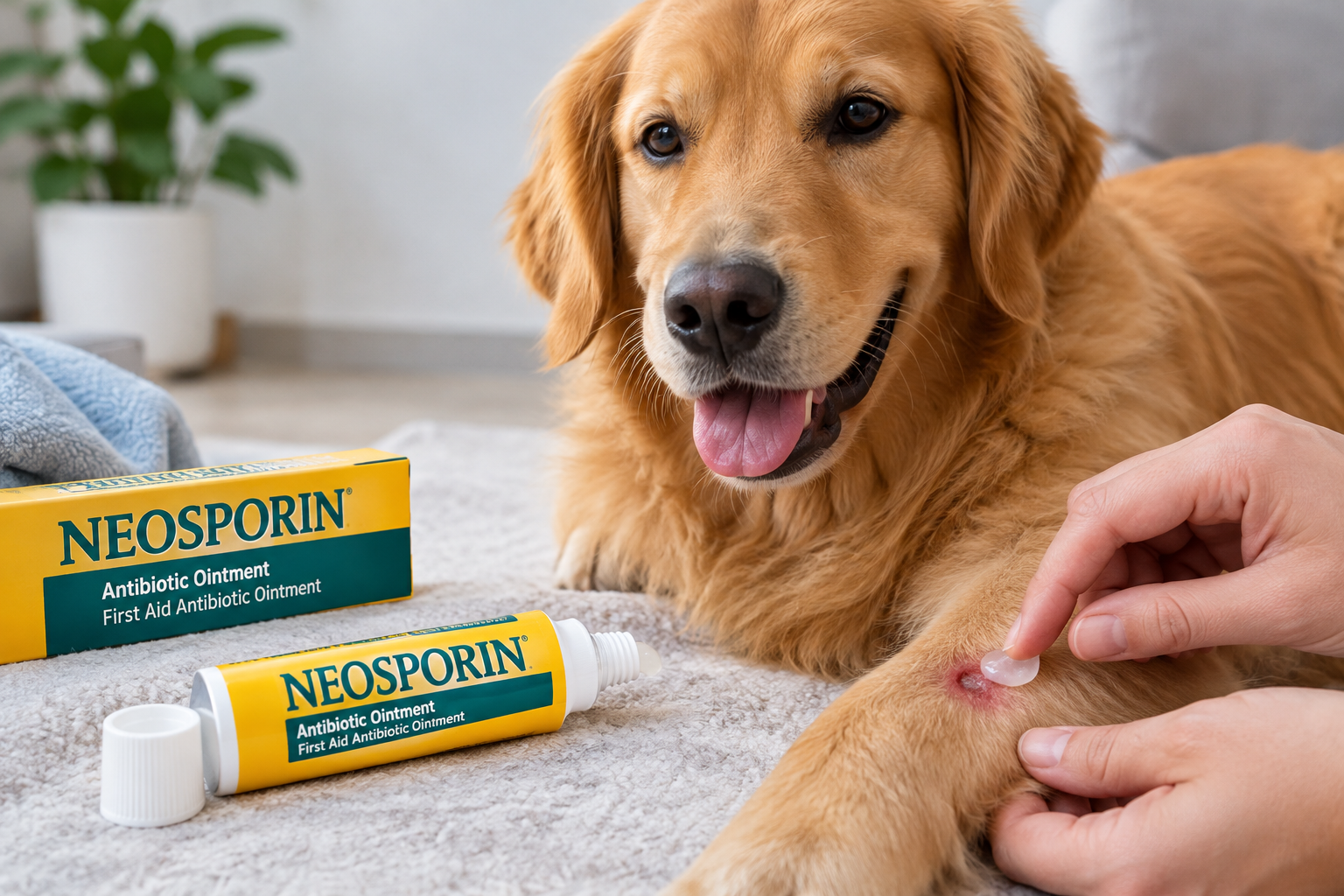
Yes, you can use Neosporin on your dog for a small, shallow scrape or cut, as long as you clean the wound first, use only a thin layer, and stop your dog from licking it off. Plain Neosporin is not toxic to dogs in small amounts. But it was made for people, it isn’t needed for most minor wounds, and it is the wrong choice for deep cuts, bites, punctures, eyes, and ears.
This guide covers when a dab of Neosporin is fine, when to skip it, how to apply it the right way, and what to do if your dog licks it off.
What is in Neosporin?
Neosporin is a “triple antibiotic” ointment. It has three germ-killing drugs mixed into a petroleum jelly base. Each drug works on a different group of bacteria, which is why they are combined.
| Ingredient | Amount per gram (Original) | What it does |
| Bacitracin zinc | 400 units | Kills many common skin bacteria |
| Neomycin sulfate | 3.5 mg | Kills a wider range of bacteria |
| Polymyxin B sulfate | 5,000 units | Targets bacteria the other two miss |
| Petrolatum (base) | Most of the ointment | Seals in moisture and keeps dirt out |
The “Pain Relief” versions add a fourth active ingredient, pramoxine, a numbing agent. That small difference matters for dogs, and we cover it below.
The petroleum base is part of why Neosporin helps. It keeps a small wound moist, which can help it heal, and it puts a light barrier over the skin. The downside is that it’s greasy, it tastes interesting to a dog, and it doesn’t stay put on fur.
When is Neosporin okay to use on a dog?
Neosporin is a reasonable choice when the wound is minor, on the surface, and in a spot your dog can’t easily reach with its tongue. Good examples:
- A small scrape on the leg from a rough play session
- A shallow nick from nail trimming that has stopped bleeding
- A light graze on the back or shoulder after brushing past a branch
In all of these cases the skin is broken only on the top layer, the bleeding has stopped, and the wound is small, about the size of a coin or less.
Here’s the honest part: many of these wounds will heal fine with nothing more than a good cleaning. Neosporin adds a little extra protection against infection, but it is optional. If your dog is the type to lick everything off in ten seconds, skipping it is often the smarter move.
Quick rule: If the wound is small, shallow, clean, and not bleeding, a thin layer of plain Neosporin is fine. If any of those four things isn’t true, call your vet instead.
When should you not use Neosporin on your dog?
Some wounds need a vet, not an ointment. Neosporin only works on the surface, so it can’t reach bacteria pushed deep into tissue. On a deep wound, it can even seal the top while infection grows underneath.
Do not use Neosporin on:
- Deep cuts or gaping wounds. If you can see the layers under the skin or the edges pull apart, it may need stitches.
- Puncture wounds and animal bites. These look small on the outside but often go deep, and bite wounds carry a high risk of infection. They usually need a vet exam and sometimes oral antibiotics.
- Wounds that are still bleeding. Stop the bleeding with firm pressure first. If it won’t stop, go to a vet.
- Eyes. Neosporin ointment is not made for eyes. Your vet can prescribe an eye-safe product.
- Inside the ears. Neomycin can damage hearing if it reaches the inner ear, especially if the eardrum is torn. Never put it in the ear canal.
- Large areas of skin. A big wound or rash means more ointment, more licking, and more risk.
- Burns. Burns need a vet’s care, even when they look mild.
- Hot spots. These red, moist, itchy patches need the area clipped and dried. A greasy ointment holds moisture against the skin, and hot spots usually clear faster with a vet-prescribed treatment.
- Puppies. Young puppies are small and more sensitive, so ask your vet before using any human ointment.
Can I put Neosporin on my dog’s nose or face?
It’s best to avoid it. A dog’s nose sits right above its tongue, so anything you put there gets licked off within seconds. That means your dog swallows the ointment and the wound gets none of the benefit.
For a small scrape on the nose, gently clean it with saline and let it air dry. Noses heal well on their own when kept clean. Around the mouth and lips, the same rule applies: clean it and leave it be.
If the scrape is near the eye, don’t put any ointment there at all. A smear can easily slide into the eye. Call your vet, since eye injuries can get worse fast and need a product made for eyes.
Which Neosporin products should you avoid?
Stick to Neosporin Original (or a plain store-brand triple antibiotic ointment). Avoid any version with “Pain Relief,” “Pain + Itch,” or similar words on the box.
Those versions contain pramoxine, a numbing drug. Pramoxine isn’t meant to be swallowed, and dogs swallow what you put on them. Numbing agents can also make the mouth feel strange, which can lead to drooling or upset stomach if your dog licks a lot.
It also helps to skip creams and sprays. The ointment form stays on better and has fewer extra ingredients. Before you buy, read the “Active ingredients” panel on the back. You want only bacitracin, neomycin, and polymyxin B, and nothing else.
How to apply Neosporin to a dog safely
If the wound passes the checks above, here’s how to do it right. Most of the real work is in the cleaning, not the ointment.
- Stop any bleeding. Press a clean cloth on the wound for a few minutes. Don’t lift it to check too early.
- Trim the fur around the wound. Use blunt-tip scissors or clippers to clear a small area. Fur traps dirt and keeps the wound damp.
- Clean the wound. Rinse it with clean, lukewarm water or saline (salt water). You can also use a pet-safe antiseptic such as chlorhexidine, diluted the way the label says.
- Pat it dry. Use a clean gauze pad or paper towel. Don’t rub.
- Apply a very thin layer. A small dab on your fingertip or a cotton swab is enough. You should barely see it. More ointment does not mean faster healing.
- Keep your dog from licking. Distract your dog for 10 to 15 minutes so the ointment can soak in. For longer protection, use a cone, an inflatable collar, a soft recovery suit, or a loose bandage your vet has shown you how to put on.
- Repeat once or twice a day. Clean the area each time before you put on more.
- Watch it for a few days. A minor scrape should look better within 2 to 3 days. If it doesn’t, stop and call your vet.
Don’t use hydrogen peroxide or rubbing alcohol to clean the wound. Both can harm healthy tissue and slow healing, and alcohol stings.
What happens if my dog licks off Neosporin?
If your dog licks off a thin layer, it will most likely be fine. The amount is tiny, and the active ingredients don’t absorb well from the gut.
The most common problem is a mild upset stomach. Watch for:
- Vomiting
- Diarrhea
- Drooling
- Not wanting to eat
These signs usually pass within a day. The bigger problem with licking is that it removes the ointment and puts bacteria from the mouth right back into the wound. Constant licking can also turn a small scrape into an open sore.
If your dog chewed into the tube and ate a large amount, call your vet or the ASPCA Animal Poison Control Center at (888) 426-4435. A consultation fee may apply. Large amounts of the petroleum base can cause stronger stomach upset, and pieces of the tube itself can cause a blockage. Have the box handy so you can read out the exact product and ingredients.
Are there risks of using Neosporin on dogs?
For a small scrape and a thin layer, the risk is low. But it isn’t zero, and you should know what to watch for.
Skin reactions. Some dogs react to neomycin or another ingredient. Signs include more redness, swelling, itching, or small bumps around the wound. If the area looks worse after you apply it, wipe it off gently and stop using it.
Hearing damage. Neomycin is known to harm the inner ear if it gets deep inside. This is why it should never go in the ear canal. On the skin, this isn’t a concern.
Slower healing from overuse. Putting on too much, or using it for weeks, can kill helpful bacteria on the skin and keep the area too moist. If a wound needs more than about a week of care, it needs a vet.
Antibiotic resistance. Every time antibiotics are used when they aren’t needed, bacteria get a chance to learn to survive them. Save antibiotic ointment for wounds that really benefit from it.
Better options for minor dog wounds
For many small wounds, the best treatment is simple: clean it well and keep your dog from licking it. That alone handles most scrapes.
If you want something made for dogs, there are good choices:
- Chlorhexidine solution or wipes. A gentle antiseptic used by vets that is safe on dog skin when diluted the right way.
- Hypochlorous acid wound sprays for pets. These clean the wound and are generally safe if your dog licks a little.
- Vet-prescribed ointments. If your dog gets scrapes often, ask your vet for a dog-safe product to keep at home.
A basic pet first aid kit with saline, gauze, blunt scissors, a cone, and a dog-safe antiseptic will cover most small injuries better than human ointment.
When should you take your dog to the vet?
Some wounds look minor but aren’t. See your vet if you notice any of these:
- Bleeding that doesn’t stop after 5 to 10 minutes of firm pressure
- A wound that is deep, gaping, or longer than about an inch
- Any bite wound or puncture, even a small one
- Swelling, heat, pus, or a bad smell
- Redness that spreads away from the wound
- Your dog acts tired, won’t eat, or has a fever
- Your dog yelps or pulls away when you touch the area
- A wound that isn’t clearly better after 2 to 3 days
For more on handling bleeding and other emergencies at home before you reach the clinic, the AVMA’s first aid tips for pet owners are a solid guide. Any first aid should be followed by a call to your vet if you’re not sure.
Conclusion
You can use Neosporin on your dog, but only plain Neosporin Original, only on small and shallow wounds that have stopped bleeding, and only in a thin layer after a good cleaning. Keep your dog from licking it, skip the “Pain Relief” versions, and never use it in the eyes, in the ears, or on deep cuts, bites, or punctures. If a wound looks deep, bleeds, swells, or isn’t better in two to three days, call your vet.
Frequently asked questions
Is Neosporin toxic to dogs? No, plain Neosporin is not toxic to dogs in small amounts. A dog that licks off a thin layer may get a mild upset stomach. Eating a large amount or chewing the tube is a reason to call your vet.
Can I use Neosporin on my dog’s paw? You can, but it rarely stays on. Dogs lick their paws and walk on them, so the ointment gets licked off or rubbed away. Clean the paw well and use a clean sock or bootie to protect it.
Can I put Neosporin on my dog’s hot spot? It’s better not to. Hot spots need the fur clipped and the area kept dry, and a greasy ointment can hold moisture in. A vet can prescribe a treatment that clears hot spots faster.
Can I use Neosporin on my dog after spay or neuter surgery? No, not unless your vet tells you to. Surgical cuts should be kept clean and dry, and putting ointment on them can soften the stitches or glue. Follow your vet’s after-surgery instructions.
What can I use instead of Neosporin on my dog? For most small wounds, cleaning with saline or a diluted chlorhexidine solution is enough. Pet-safe hypochlorous acid sprays also work well. Your vet can recommend a dog-specific ointment for home use.
Related Articles
Can I Give My Dog Benadryl? Safe Dose and Risks
One thought on “Can I Use Neosporin on My Dog? Safe Use, Risks & How-To”