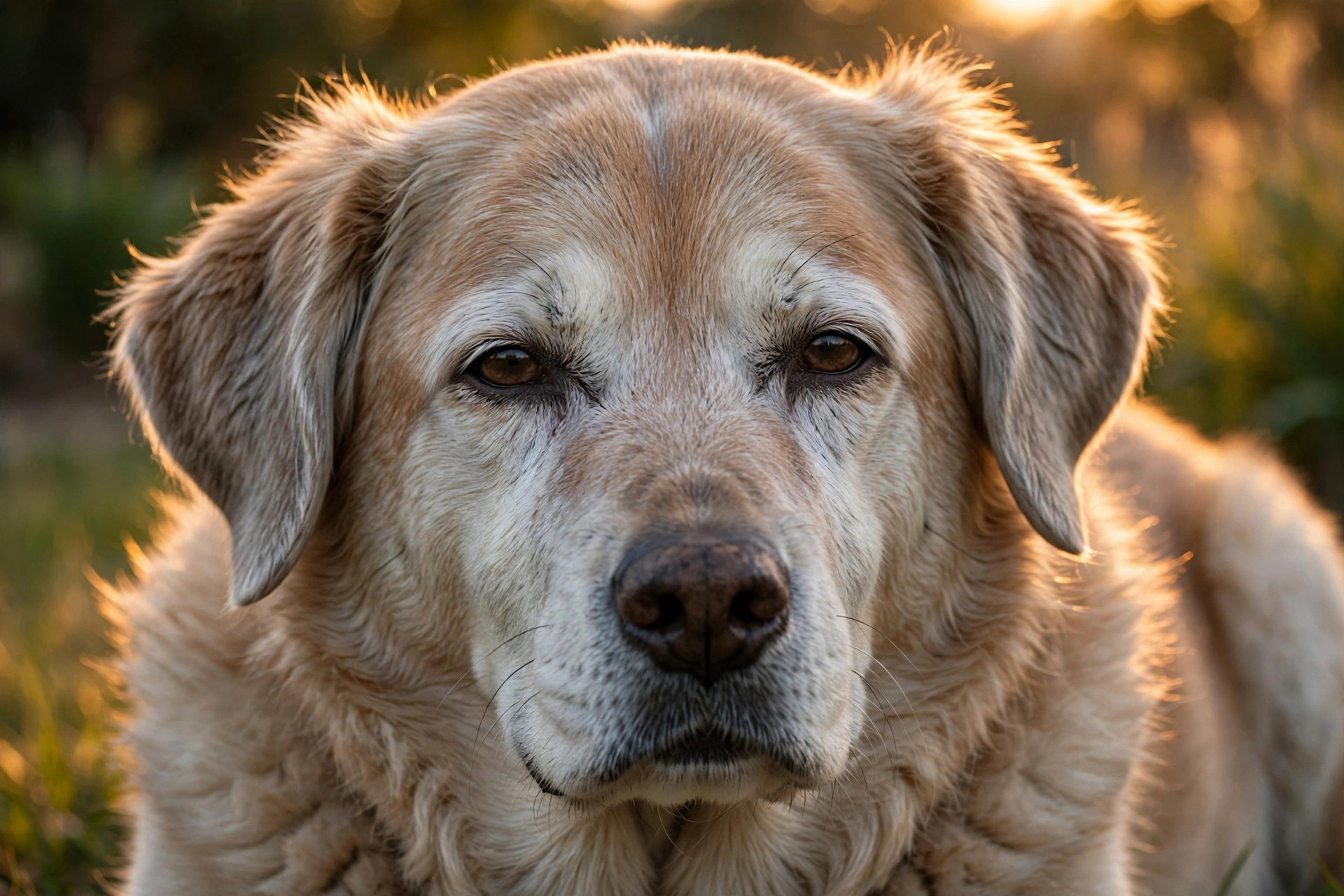

If you’re reading this at 2 a.m. with a quiet house and an empty dog bed in the corner, you’re not alone. “Do dogs go to heaven?” is one of the most searched questions after a dog dies, and it usually isn’t really a theology question. It’s a love question.
Here’s the honest answer up front: nobody can prove what happens to a dog after death, the same way nobody can prove it for people. What we can tell you is what the world’s faiths have said about it, why so many owners believe they’ll meet their dog again, and why hoping for that is a perfectly reasonable way to grieve. There is no wrong answer here. There’s only the one that lets you sleep.
Why do we ask if dogs go to heaven?
Most of us don’t ask this about the neighbor’s dog. We ask it about the dog who slept against our legs for eleven years, who knew the sound of our car, who sat with us through breakups, illnesses and bad years without needing any of it explained.
A dog isn’t a possession you lose. It’s a daily relationship. You structured your mornings around walks, your evenings around feeding, your holidays around who would take care of him. When that stops all at once, the silence is physical. Owners talk about still listening for nails on the kitchen floor weeks later. That’s not weakness. That’s a brain built around a routine of care, suddenly with nowhere to put it.
There’s often guilt tangled up in the question too, especially if you had to make the call to let your dog go. People ask “is he somewhere better?” when what they really mean is “did I do right by him?” If that’s where you are, hear this plainly: choosing to end suffering, at the right time, with your dog held and loved, is one of the kindest decisions an owner ever makes. The grief you feel afterward is not evidence you got it wrong. It’s evidence of how much of your life he filled.
Do dogs go to heaven? What different faiths believe
There’s no single answer, because faiths have never spoken with one voice on animals. Even within one religion, you’ll find comfort offered in one place and silence in another. Here’s a fair summary of the main positions, offered as information, not as a verdict.
| Faith | What is generally believed about animals after death |
|---|---|
| Christianity | Scripture doesn’t address pets in heaven directly, so Christians disagree. Many point to verses describing animals in a renewed creation and take comfort in the idea of meeting their animals again. The Catholic Church has never made a formal ruling that animals do or don’t go to heaven, and plenty of priests will tell a grieving child that God wouldn’t separate them from a creature they love. |
| Islam | The Qur’an describes animals as communities in their own right, not lesser things. Many Muslim scholars teach that animals will be brought back on the Day of Judgment so that wrongs between creatures can be set right, and that God’s mercy covers them. Beyond that, most leave the details to God. |
| Judaism | Jewish teaching focuses mostly on life in this world, and views on an animal afterlife vary widely. Kindness to animals, though, is a serious duty, and many Jewish owners find comfort in the belief that a good God’s creation doesn’t simply waste love. |
| Hinduism | Hindu belief holds that souls pass through many lives, and an animal’s life is one stage in that long journey rather than a dead end. A dog’s soul, in this view, continues onward just as a person’s does. |
| Buddhism | Buddhist teaching also describes rebirth through different forms of life, animals included, and treats compassion toward animals as central. A dog’s story doesn’t simply stop, even if it doesn’t continue in a heaven as such. |
Notice what runs through almost all of these: the people who thought hardest about it rarely concluded that an animal’s life just evaporates into nothing. Teachers and theologians argue about the shape of what comes next. Very few argue for an ending that’s cold or dismissive.
If your own faith gives you a clear answer, hold on to it. If it doesn’t, you’re in the same position as most believers through history, filling a silence with hope. Hope is a respectable filler.
What is the Rainbow Bridge, and where did it come from?
Ask a room of dog owners about the Rainbow Bridge and half of them will tear up before you finish the sentence. It’s a short prose poem that has been passed between grieving owners for decades. Nobody knows for certain who wrote it. Versions started circulating in the 1980s and 1990s, shared in vets’ waiting rooms, printed on sympathy cards, and later spread all over the early internet, usually credited to “author unknown.”
The idea, in plain words, is this: when a beloved pet dies, he goes to a green, sunny meadow just this side of heaven. There he’s young and whole again — the old stiffness gone, sick dogs well, injured dogs mended. He plays, eats, sleeps in the sun, and he’s content, except for one thing. He misses one particular person. Then one day he stops mid-play, stares toward the horizon, and runs faster than he ever ran in life, because that person has finally arrived. They cross the bridge together.
Is it scripture? No. Is it “true”? Nobody can grade that. But consider why it has outlived almost every other piece of pet writing ever shared. It answers the three fears every owner carries out of the vet’s office: Is he in pain? No, he’s whole. Is he scared and alone? No, he’s in a warm, safe place. Will he forget me? No — he’s watching for you, specifically you. A story that gently answers all three fears will be handed from one grieving stranger to another forever, and it has been.
You don’t have to believe a word of it literally for it to help. Plenty of owners who’d call themselves skeptics still keep a printed copy in a drawer. Sometimes what we call belief is really just a place to set the love down for a while.
What “signs” do owners take comfort in?
Spend any time in a pet-loss support group and you’ll hear the stories. A dream so vivid the owner woke up reaching for the dog. The click of tags in an empty hallway. A butterfly that followed the old walking route. The surviving cat sleeping in the dog’s bed for the first time, the night after.
We can’t tell you those are messages, and we won’t pretend otherwise. What we can tell you is that they’re extremely common, that grief researchers hear them constantly, and that a grieving mind is a mind still scanning for the one it lost — the same way you still glance at the door at walk time. Whether a sign is a visit, a memory surfacing, or your brain doing what love trained it to do, the comfort it brings is real, and comfort doesn’t need to be audited.
If a sign gives you a peaceful night, take the peaceful night. That’s not foolishness. That’s the bond doing one last bit of work.
Do the other dogs in the house grieve too?
Very often, yes. Owners are sometimes so deep in their own loss that it takes a few days to notice the quiet dog in the corner of it. Surviving dogs may go off their food for a day or two, sleep more than usual, lose interest in games, or keep returning to the lost dog’s bed, toys or favorite spot by the door. The American Kennel Club’s guide to grieving a pet describes exactly these changes and suggests what steadies a mourning dog: extra closeness and attention, keeping the daily routine intact, and finding new things to do together, like a different walking route or a beginner training class for something to share.
Watch the appetite most of all. A day of picking at food is understandable. A dog who stops eating properly for more than a couple of days, or seems unwell rather than sad, needs a vet — the same home checks you’d use for any off-color dog apply, and our guide on how to tell if a dog has a fever walks through them. Grief and illness can look alike, and only one of them should be waited out.
How do you cope with losing a dog?
There is no schedule for this, whatever well-meaning people say about stages. Grief for a dog tends to come in ambushes: fine at breakfast, undone at 6 p.m. because nobody needed letting out. A few things genuinely help, gathered from owners and the counselors who work with them.
Let it be what it is. Don’t grade your grief against anyone else’s, and don’t let anyone grade it for you with a “he was only a dog.” He wasn’t only anything. The people who say that have usually never been a dog’s whole world, and your dog was yours.
Do something with your hands. Frame the best photo. Plant something in the spot he used to sunbathe. Keep the collar on your keyring if that feels right, or put his things in a box if looking at them daily is too much right now. Both are fine. There’s no correct setting for the bowl by the door; there’s only when you’re ready.
Talk to people who get it. This is where owners say the real relief lives. Pet-loss support groups exist online and through many vet clinics, shelters and churches, and the ASPCA’s end-of-life care resources cover coping with loss and point toward support, including help with talking to children about it. An hour with strangers who nod instead of changing the subject is worth a month of being brave at the office.
Take care of the body you’re grieving in. Grief wrecks sleep and appetite. Eat something simple, get outside in daylight, walk the old route if you can stand it — many owners say keeping the walk, at the same time each day, carried them through the first month. Movement and daylight won’t fix anything, but they help.
Be careful with the “next dog” question. Some owners heal by bringing a new dog home within weeks, and that’s not betrayal; it’s a house that knows how to love a dog refusing to waste it. Others can’t look at a puppy for a year. Both are normal. The only mistake is letting somebody else set your clock — or adopting in a midnight panic to stop the hurting tonight. A new dog deserves to be wanted for himself, not hired as medicine.
Watch for the harder edges. If weeks pass and you can’t sleep, can’t work, or can’t get through a day, that’s not something to white-knuckle. Losing a dog can sit on top of everything else life has handed you, and a good counselor (some specialize in pet loss) is money and time well spent.
Conclusion
Do dogs go to heaven? Every faith that has wrestled with the question leaves the door at least a crack open, millions of owners through the centuries have walked through it, and the Rainbow Bridge has become the story they tell while they wait to find out. Nobody gets to hand you proof, and nobody gets to take the hope away, either.
What is certain doesn’t need faith at all. Your dog’s life here was warm, fed, safe and loved, because you made it so. He didn’t spend one day worrying about what comes next; dogs live entirely in the life they’re given, and you gave him a good one. If there is a meadow, he’s in it, young again, watching the horizon. And if the answer turns out to be simpler — that love this strong just stays with the one who felt it — then he’s with you either way.
Frequently asked questions
Do dogs have souls?
It depends who you ask, and honest teachers admit it. Some faiths teach that animals have souls of a different kind than human souls; Hindu and Buddhist traditions treat a dog’s inner life as one stage of a soul’s long journey. Other traditions stay silent on the question entirely. What’s harder to find is a major faith that insists a dog is nothing more than a machine that stopped. Most leave room — and grieving owners have always stepped into that room.
Will I see my dog again in heaven?
Many people believe exactly that, including a great many Christians, Muslims and others whose traditions describe animals present in the world to come or restored on a day of judgment. Others find the same comfort in the Rainbow Bridge story. Nobody can promise you a reunion, and we’d rather be straight with you than sell you certainty. But hoping for one is neither silly nor unusual — it’s one of the most human hopes there is.
What does the Bible say about dogs going to heaven?
The Bible doesn’t speak to the question directly; there’s no verse that settles whether pets are in heaven. Passages describing animals in a restored, peaceful creation are the ones people most often turn to, and readers have drawn hopeful conclusions from them for a long time. Churches land in different places — some pastors preach confidently that we’ll see our animals again, others say simply that heaven will not lack anything we loved. If this matters to you, it’s a kind conversation to have with your own pastor or priest, who will know it comes from love.
Is it normal to grieve a dog as much as a person?
Yes, and for a lot of owners the grief is heavier than they expected — sometimes heavier than grief they’ve felt for people, which can bring its own guilt. Try to drop the guilt. You spoke to your dog a hundred times a day, touched him constantly, cared for his every need, and built your schedule around him for a decade or more. Few human relationships are that woven into the fabric of a day. The size of the grief matches the size of the space he took up, and that space was enormous.
How long does it take to get over losing a dog?
There’s no standard timetable, and anyone who hands you one hasn’t done this themselves. The sharpest stretch is usually the first few weeks, when every routine in the house still points at the missing dog. Many owners say something softens around the two- or three-month mark — the good memories start arriving before the painful ones. For some it’s a year of firsts: first spring, first snow, first holiday without him. You don’t really “get over” a dog like that. The loss gets smaller around the love, not the other way round, and one day you notice you’ve been smiling at a memory instead of crying at it.
Related Articles