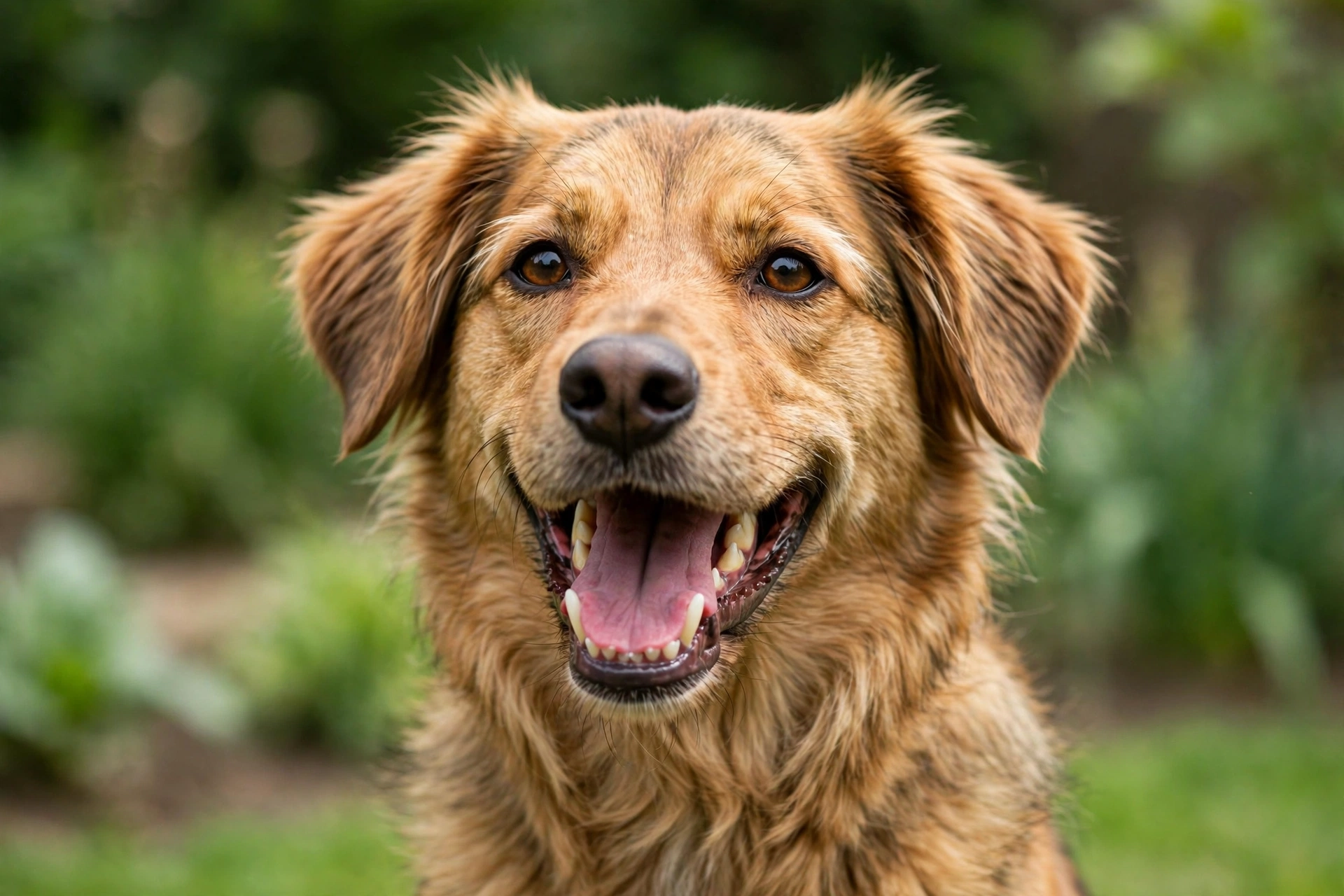

Try counting your dog’s teeth the next time he yawns on the couch. It sounds like a ten-second job, and then he closes his mouth, shakes his head, and you are back to guessing.
So, how many teeth do dogs have? An adult dog has 42 permanent teeth. A puppy starts out with 28 baby teeth, which fall out during the first few months of life and are replaced by the adult set. That is ten more teeth than the 32 most adult humans carry around, and a dog uses every single one of them. Dogs do not have hands to hold their food, so their teeth do the grabbing, tearing, slicing and grinding for them.
Here is the full breakdown: what each type of tooth does, when the puppy teeth come in and fall out, why some dogs end up with more or fewer than 42, and how to keep the whole set healthy.
How many teeth do dogs have? The short answer: 42 for adults, 28 for puppies
Dogs are born with no teeth at all. The first set that pushes through the gums is temporary, and vets call these deciduous teeth. You will more often hear them called baby teeth, puppy teeth or milk teeth. There are 28 of them.
The adult set that replaces them has 42 teeth, split unevenly between the jaws:
| Upper jaw | Lower jaw | Total | |
|---|---|---|---|
| Puppy (deciduous) teeth | 14 | 14 | 28 |
| Adult (permanent) teeth | 20 | 22 | 42 |
That extra pair in the lower jaw is one reason a quick count so often goes wrong. Most owners also give up around the back molars, which sit far behind the cheek and barely show unless a dog is panting with his mouth wide open.
What are the 4 types of teeth in a dog’s mouth?
A dog’s mouth is not a row of identical pegs. There are four different types of teeth, and each one has a specific job, just like yours. The American Kennel Club breaks the adult set down like this:
| Type of tooth | How many | Where they sit | What they do |
|---|---|---|---|
| Incisors | 12 | The small front teeth, 6 on top and 6 below | Nibbling, scraping meat off bones, grooming and picking things up gently |
| Canines | 4 | The long pointed fangs, one pair in each jaw | Gripping, holding and tearing; also help keep the tongue in place |
| Premolars | 16 | The jagged teeth along the sides, behind the canines | Slicing and shearing food into swallowable pieces |
| Molars | 10 | Right at the back, 4 on top and 6 below | Crushing and grinding hard food |
The incisors are the tiny teeth most people notice first, in a neat row between the fangs. They look too small to matter, but watch a dog strip the last of the meat off a bone or carefully carry a soft toy, and you are watching the incisors work.
The big cheek tooth on the upper jaw deserves a special mention. The largest premolar, called the carnassial tooth, has three roots instead of one and does most of the heavy slicing. It is also the tooth vets see cracked most often, usually after a dog has been let loose on something much harder than a tooth can handle. Remember that before handing over an antler or a thick weight-bearing bone.
How many teeth do puppies have?
Puppies have 28 teeth, and the mix is different from an adult’s. A puppy has the same 12 incisors and 4 canines, plus 12 premolars, but no molars at all. A puppy does not need grinding teeth because a puppy is not grinding anything yet. For the first few weeks the only thing on the menu is milk, and after that comes soft, soaked food that tiny jaws can manage without much horsepower.
Those 28 puppy teeth are famously sharp. Anyone who has raised a young puppy has the tiny pinpricks on their fingers to prove it. The teeth are pointed partly because a puppy’s jaw muscles are still weak, so sharpness does the work that jaw strength will do later.
The first teeth start pushing through the gums at around 2 to 3 weeks of age, usually the incisors and canines first, then the premolars. By roughly 6 to 8 weeks, most puppies have the full set of 28, which is also right around the age many puppies head off to their new homes. If you collect a puppy at eight weeks and he is chewing the furniture, the skirting boards and you, this is why.
When do puppy teeth fall out?
The changeover starts surprisingly soon after the baby teeth arrive. From about 3½ to 4 months of age, the adult teeth begin pushing up underneath the puppy teeth. As each adult tooth moves in, the root of the baby tooth above it dissolves, the baby tooth loosens, and out it comes.
It generally happens in this order:
| Stage | Rough age |
|---|---|
| First baby teeth appear | 2–3 weeks |
| Full set of 28 baby teeth | 6–8 weeks |
| Adult incisors push the baby incisors out | 3–5 months |
| Adult canines and premolars come through | 4–6 months |
| Adult molars arrive (brand new, no baby version) | 5–7 months |
| Full set of 42 adult teeth | 6–7 months |
Small breeds tend to run a little later than big breeds, and a week or two either side of these numbers is nothing to worry about.
Most owners never find the teeth that fall out. Puppies swallow the majority of them, usually during a meal, and it does them no harm at all. You might spot the odd one on the floor or stuck in a chew toy, and a little blood on a toy during the changeover weeks is normal too.
What you should expect is chewing. A lot of chewing. Sore gums make puppies gnaw, so this is the stage to offer proper chew toys, a damp flannel twisted and frozen for an hour, or a wet rope toy straight from the freezer. It saves your chair legs, and it genuinely soothes the gums. What it should not involve is your hands. Letting a puppy chew fingers because it is cute at eight weeks teaches a habit that is far less cute in a 30-kilo adult.
Why do some dogs have more or fewer than 42 teeth?
Count a real dog’s teeth and you might not land on 42. There are a few common reasons.
A baby tooth that refuses to leave. Sometimes an adult tooth comes through and the baby tooth sitting in front of it simply stays put. Vets call this a retained or persistent deciduous tooth, and VCA Animal Hospitals notes it happens most in the small and toy breeds, such as Yorkshire Terriers, Maltese, Chihuahuas and Toy Poodles. Two teeth in one spot crowd the mouth, trap food, and push the adult tooth out of line, so retained teeth are usually taken out by the vet, often during the spay or neuter surgery. If your puppy is seven months old and still has a baby fang sitting beside the adult one, book that check.
Extra or missing teeth. Some dogs grow a spare tooth here or there, and some never grow one that should be there. Flat-faced breeds like Bulldogs, Boxers and Shih Tzus have the same 42 teeth squeezed into a much shorter jaw, so crowding, rotated teeth and teeth that never fully erupt are common in those breeds.
Teeth lost along the way. Adult dogs lose teeth to injury, to a crack that reaches the root, and most often to gum disease that loosens the tooth in its socket. A missing tooth in a senior dog is common, but it is not something to shrug off. A tooth that vanished usually means the mouth was sore for a while first.
If you want a closer look at how fit and unwell dogs differ, our guide on how to tell if a dog has a fever covers the home checks that sit alongside a mouth check, and both take under two minutes.
How can you tell if your dog’s teeth are healthy?
You do not need any equipment for a basic mouth check, and a dog who is used to it will tolerate it happily once a week. Lift the lip gently on each side and look at the big teeth at the back, because that is where problems start.
A healthy mouth looks like this:
- Gums are pink (or dark, in breeds with pigmented gums), not red, swollen or bleeding
- Teeth are white to slightly cream, with no thick brown crust building up along the gumline
- Breath smells like very little at all. Normal dog breath is not minty, but it should never make you recoil
- Your dog eats on both sides of his mouth and picks up hard kibble without hesitation
The warning signs are just as clear: brown tartar creeping over the back teeth, a red line where tooth meets gum, pawing at the mouth, dropping food, chewing on one side only, or breath that has turned genuinely foul. Any of those mean the mouth needs a vet’s eyes, not a new dental chew.
How do you keep all 42 teeth healthy?
Gum disease is the most common health problem vets treat in adult dogs, and the frustrating part is how preventable it is. Plaque starts forming on a clean tooth within hours, and if it is not brushed away it hardens into tartar within a couple of days. Tartar cannot be brushed off at home. It needs a professional clean under anaesthetic, which is exactly what regular brushing helps your dog avoid.
Brush, and start slowly. A soft dog toothbrush or a finger brush, plus toothpaste made for dogs, is the single most useful thing you can own. Never use human toothpaste, because it contains ingredients like xylitol that are dangerous for dogs, and dogs cannot spit. Start by letting your dog lick the toothpaste off your finger for a few days, then touch the brush to the front teeth, then work backwards over a week or two. Thirty seconds a side, a few times a week, beats a stressful wrestling match every night.
Use chews and toys with a bit of sense. Dental chews carrying the VOHC (Veterinary Oral Health Council) seal have actually been tested for reducing plaque or tartar, so look for that logo rather than packaging claims. For toys, use the thumbnail test: if you cannot dent the surface with your thumbnail, it is hard enough to crack a tooth. Rawhide, antlers and cooked bones all fail that test in most vets’ opinions.
Make the mouth check part of a weekly routine. Owners who groom at home tend to catch things early. If you are already checking ears each week with a routine like the one in our guide on how to clean dog ears at home, add a ten-second lip lift while you are at it. Dogs accept these checks far more calmly when they happen on an ordinary day, not just at the vet’s table.
Budget for a professional clean when your vet advises one. No amount of home care removes tartar that has already set. A scale and polish under anaesthetic lets the vet clean under the gumline, which is where the damage actually happens, and check every tooth properly.
When should you see a vet about your dog’s teeth?
Book an appointment if you notice any of the following:
- A baby tooth still in place at 7 months old, sitting next to its adult replacement
- A broken or cracked tooth, especially if you can see a pink or dark spot in the middle of it
- Bleeding gums, a loose adult tooth, or a tooth that has changed colour
- Your dog pawing at his face, rubbing his muzzle on the floor, or suddenly refusing hard food
- A swelling on the face just below the eye, which often points to an abscess on a back upper tooth
- Bad breath that arrived suddenly rather than creeping in over months
Tooth pain rarely stops a dog eating altogether. Dogs are good at quietly working around a sore mouth, which is why these smaller signs matter. Catching a problem at the “chewing on one side” stage is a far cheaper and kinder outcome than an extraction, and if the bite itself looks uneven, VCA’s guide to malocclusions in dogs explains how vets assess teeth that do not line up.
Conclusion
So, to answer the question one last time: puppies have 28 baby teeth, adult dogs have 42 permanent teeth, and that set is made up of 12 incisors, 4 canines, 16 premolars and 10 molars. The swap from one set to the other is done and dusted by about seven months of age.
The number is the easy part. Keeping all 42 in good shape for the next ten to fifteen years is the real job, and it mostly comes down to small, boring habits: a toothbrush a few times a week, chews that are not hard enough to crack a tooth, and a ten-second look inside the mouth whenever you are grooming anyway. Do those, and your dog has a very good chance of keeping his full set, and his comfort, well into old age.
Frequently asked questions
Do all dog breeds have 42 teeth?
Yes, the number is the same whether you own a Chihuahua or a Great Dane. What changes is the size of the jaw the teeth have to fit into. Small and flat-faced breeds have the same 42 teeth in far less space, which is why they suffer more from crowding, rotated teeth and retained baby teeth, and why their dental care matters even more.
How many teeth do dogs have compared to humans?
Adult dogs have 42 teeth and adult humans have 32, including the wisdom teeth that many people have removed. Dogs also start with more: 28 puppy teeth against the 20 baby teeth a human child gets. The difference makes sense when you remember that a dog’s teeth have to do the cutting and tearing that we offload onto knives and forks.
Why are puppy teeth so sharp?
Puppy teeth are needle-sharp because a young puppy’s jaw is weak. Pointed teeth do the piercing and tearing work that strong adult jaws will handle later. That sharpness also teaches puppies bite control. When a puppy bites a littermate too hard, the other puppy yelps and stops playing, and over a few weeks the puppy learns to soften its mouth. It is one of the reasons puppies benefit from staying with their litter until at least eight weeks old.
Can a dog eat normally if it loses some teeth?
Usually, yes, and this surprises a lot of owners. Dogs do not chew as thoroughly as we do in the first place, and their gums harden after an extraction, so many toothless dogs manage softened kibble and even some dry food perfectly well. A dog with a pain-free mouth and six teeth missing will eat far more happily than a dog with a full set and one tooth quietly rotting.
How many teeth should an older dog have?
Ideally all 42, and plenty of senior dogs do keep the full set. In reality, older dogs often lose a few to gum disease or damage over the years, and that is common rather than a failure on the owner’s part. What is not normal is a senior dog putting up with sore gums, loose teeth or foul breath. Old age alone is not a reason to leave a painful mouth untreated, so keep up the checks and let your vet judge what needs doing.
Related Articles