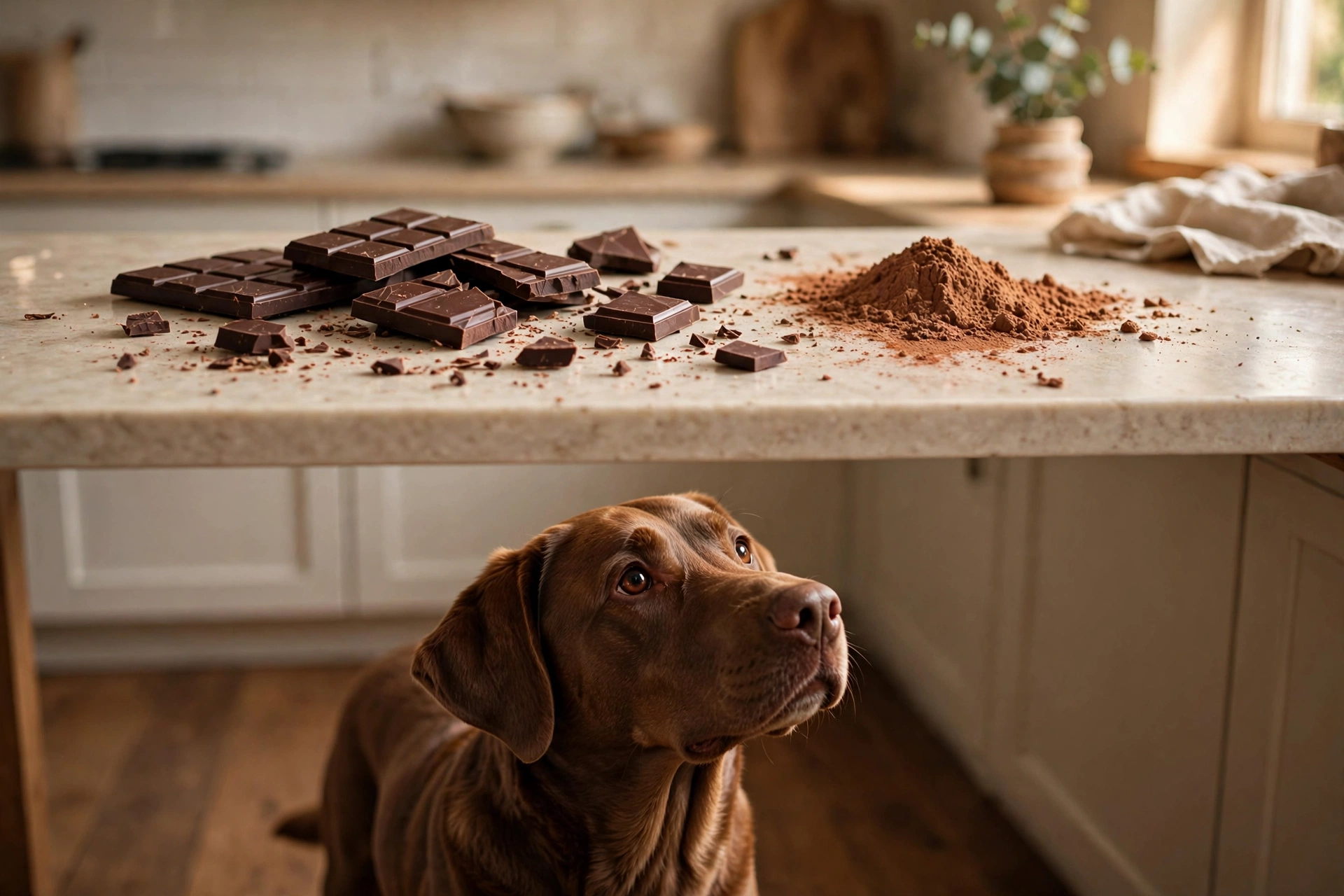

You have found the torn wrapper, the empty box, or the guilty face with brown smears around the muzzle. Your dog has eaten chocolate. Here is what to do if your dog eats chocolate, in one breath: take what’s left away from him, and phone your vet or an animal poison line right now. Don’t wait to see if he gets sick, and don’t try to make him vomit unless a vet tells you to. With chocolate, the clock matters far more than the symptoms do, because the early signs can take hours to show up while the poison is quietly absorbing.
Below is the whole picture: why chocolate is dangerous, which types are worst, what vets actually do about it, and how to make sure you never have this evening again.
Why is chocolate so dangerous for dogs?
Chocolate carries two stimulants, theobromine and caffeine. Vets group them together as methylxanthines, and Cornell University’s veterinary college explains that both act on a dog’s heart and central nervous system, and also work as diuretics, so a poisoned dog loses fluid fast.
You eat chocolate and your body clears the theobromine in a few hours. A dog’s body can’t. Theobromine hangs around in a dog’s system for most of a day, which is why a dog who looks fine at lunchtime can be trembling by dinner. It stimulates the heart, irritates the gut, and at higher doses starts firing up the nervous system itself. There is no antidote that switches it off. Treatment is about getting as much out as possible, then supporting the dog while his body clears the rest.
Even a dose too small to poison can still make a dog miserable, because chocolate is loaded with fat and sugar. A rich binge can trigger days of vomiting and diarrhea, or set off pancreatitis, a painful inflammation of the pancreas that needs a vet all by itself.
Which type of chocolate is the most dangerous?
Not all chocolate is equal, and the gap between types is enormous. The darker and more bitter the chocolate, the more theobromine is packed into every ounce. The figures below are the approximate amounts vets work with, per ounce of chocolate:
| Type of chocolate | Theobromine per ounce (approx.) | Risk level |
|---|---|---|
| Cocoa powder | The most concentrated of all, several hundred mg | Extreme |
| Unsweetened baking chocolate | Roughly 130–450 mg | Extreme |
| Dark chocolate (semi-sweet to 70%+) | Roughly 130–450 mg, rising with cocoa % | High |
| Milk chocolate | Roughly 44–58 mg | Moderate |
| White chocolate | Around 0.25 mg | Very low for theobromine |
Read that table from the bottom up and you will see the trap. A dog has to eat a lot of milk chocolate before the theobromine alone reaches dangerous levels, although the fat and sugar can still wreck his stomach. But baking chocolate and cocoa powder are in a different league. VCA Animal Hospitals uses the example of a 50-pound dog: a single ounce of baker’s chocolate can be enough to potentially show signs of poisoning, while the same dog would need to eat around 9 ounces of milk chocolate to reach the same point.
Cocoa powder deserves its own warning because it hides in plain sight. It sits in baking cupboards in open tubs, it goes into brownie mixes and hot chocolate packets, and it is the most concentrated form in the kitchen. A dog who raids the baking shelf is in more trouble than a dog who steals a candy bar.
And white chocolate? It carries almost no theobromine, so it rarely poisons. It is still not safe food for a dog. It is basically fat and sugar, and a big helping can mean vomiting, diarrhea or pancreatitis. “Least dangerous” is not the same as “fine.”
How much chocolate is too much for a dog?
This is the question every owner asks, usually while doing frantic math on their phone. The honest answer is that the dose is worked out in milligrams of theobromine per kilogram of your dog’s body weight, and that calculation is your vet’s job, not yours.
Vets use rough guideposts. At lower doses, around 20 mg of theobromine per kilogram of body weight, dogs tend to show stomach and agitation signs: drooling, vomiting, diarrhea, restlessness. Push past roughly 40 mg/kg and the heart gets involved, with a racing pulse, high blood pressure and abnormal rhythms. Beyond about 60 mg/kg, tremors, twitching and seizures appear. Those numbers are exactly why the same chocolate bar is a non-event for one dog and an emergency for another.
Three things stack the odds against a dog:
- Small size. A Yorkie and a Labrador who share one stolen brownie do not share the same dose. Per kilogram, the little dog just ate many times more.
- Dark chocolate. One square of 85% dark can carry more theobromine than a whole bar of milk chocolate.
- Existing health problems. Older dogs and dogs with heart conditions cope worst, because the poison’s main target is the heart.
So skip the kitchen-table calculation. You cannot weigh what is already inside the dog, and every minute spent estimating is a minute the theobromine spends absorbing. Tell the vet the type, your best guess at the amount, and your dog’s weight, and let them run the numbers. That is what they are there for.
What are the symptoms of chocolate poisoning, and when do they start?
The delay fools people. A dog can eat chocolate at noon, bounce around the garden all afternoon, and only start showing signs in the evening. Signs most often appear within about 6 to 12 hours of eating it, and in serious cases they can last for days, because theobromine clears the body so slowly.
| Stage | What you might see |
|---|---|
| Early signs | Vomiting, diarrhea, drooling, big thirst, needing to urinate far more than usual |
| Developing signs | Restlessness, hyperactivity, heavy panting, a racing heartbeat you can feel through the chest |
| Severe signs | Muscle tremors, twitching, seizures, wobbling or collapse, a dangerously abnormal heart rhythm |
The middle row is the one owners describe as “he just can’t settle.” A dog pacing, panting and drinking bowl after bowl of water a few hours after a chocolate raid is telling you the stimulants are kicking in. If that panting won’t ease off, our guide on why your dog is breathing fast helps you judge what’s abnormal, but with chocolate in the picture, don’t sit at home monitoring. Call.
Seizures, tremors, collapse, or a heart that’s hammering irregularly are emergency-vet-now signs, at any hour. Keep the dog warm and quiet, and go.
What to do if your dog eats chocolate, step by step
1. Stay calm and move the dog away from the chocolate. Panic helps nobody, and a stressed owner makes rushed decisions. Shut the dog in another room, then gather up every scrap that’s left, including wrappers he might eat next.
2. Work out what he actually ate. Type matters most, then amount, then timing. Keep the packaging. The label tells the vet the cocoa percentage, and weighing what’s left of the bar or box gives a far better estimate than guessing. Note roughly when it happened, and know your dog’s weight, even approximately.
3. Phone your vet, or a poison line, immediately. If your own vet is closed, call their out-of-hours service or an emergency clinic. The ASPCA Animal Poison Control Center takes calls around the clock on (888) 426-4435, and the Pet Poison Helpline is another 24-hour option. A consultation fee may apply on the poison lines, and it is money well spent: they will calculate the dose and tell you plainly whether this is a stay-home-and-watch case or a get-in-the-car case.
4. Follow their instructions, and only theirs. If vomiting needs to happen, the vet will either do it at the clinic or talk you through it. Never make your dog vomit off your own bat. Done at the wrong time, or on a dog who is already shaky or drowsy, vomiting can send stomach contents into the lungs. Forget the internet remedies too: salt water, mustard and washing soda are dangerous in their own right.
5. If you’re told to go in, go now, and take the wrapper. The sooner treatment starts, the more of the chocolate can be removed before it absorbs, and early treatment is the single biggest factor in how these cases end.
6. Can’t reach anyone? Err on the side of the emergency clinic. If the chocolate was dark, baking chocolate or cocoa powder, if your dog is small, elderly or has a heart condition, or if any symptoms have started, don’t keep redialing. Drive.
What will the vet do to treat chocolate poisoning?
Knowing what happens at the clinic takes some of the fear out of the trip. There is no single antidote injection, so treatment has two aims: get the poison out, and protect the heart and brain while the body clears what got in.
If your dog arrives soon after eating the chocolate, the vet will usually induce vomiting with proper medication and watch what comes up. Activated charcoal is often given next, sometimes in repeated doses over the following hours, because it binds theobromine in the gut and stops it being reabsorbed and recycled through the body. Most dogs go on intravenous fluids, which support the heart and kidneys and keep the bladder moving, since theobromine can be reabsorbed from urine sitting in the bladder. Expect heart monitoring, and medication if the rhythm goes off, plus anti-seizure medication if tremors or fits start.
Dogs with a significant dose usually stay in for monitoring for at least a day, sometimes longer, because of that slow clearance. Hearts can misbehave late in this poisoning, and the clinic is the right place to catch it. The good news is real: dogs treated early, before severe signs develop, very often go home tired, charcoal-stained and completely fine.
What should you watch for once your dog is home?
If the vet calculated a low dose and sent you home to monitor, take that job seriously for the next day or two. The stomach signs often arrive late, and a dog who seemed untouched can still produce a miserable night of vomiting or diarrhea. Offer water little and often, keep meals small and bland for a day or so, and our guide on what to give a dog for diarrhea covers the gentle home care that helps an upset stomach settle.
Call the vet back if vomiting or diarrhea won’t stop, if your dog goes off his food completely, seems sore around the belly, or gets droopy and quiet. Those can be signs of pancreatitis developing after all that fat, and it needs treatment rather than waiting out. And if any of the stimulant signs show up late, restlessness, tremors, a racing heart, treat it as the emergency it is, whatever the first call concluded.
How do you stop it happening again?
Dogs don’t learn from a chocolate scare. Owners have to do the learning for them.
- Store chocolate like medicine. Closed cupboards, high shelves, sealed containers. A determined dog can open low drawers, climb on chairs, and unzip backpacks, and counter-surfing takes care of anything left on the worktop.
- Respect the baking shelf. Cocoa powder, baking chocolate and brownie mix are the most dangerous items in your kitchen. They live behind a shut door, never on the counter during a baking session with the dog underfoot.
- Plan for the holidays. Halloween buckets, Easter eggs, advent calendars and Christmas selection boxes are the classic raids. Candy goes in a closed room, and kids need to know that their stash under the bed is exactly where the dog will find it.
- Check the garden too. Cocoa shell mulch, sold for flower beds, contains theobromine. If your dog digs in the beds, choose a different mulch.
- Brief your guests. Chocolate in handbags, coat pockets and gift bags left on the floor is a recurring cause of these emergencies.
- Teach a solid “leave it.” It won’t save a dog alone with a chocolate cake, but it buys you the seconds to intervene when something drops on the kitchen floor.
Conclusion
So, what to do if your dog eats chocolate comes down to speed and one phone call. Move the dog away from what’s left, note the type, the amount and the time, and ring your vet or a poison line straight away, before symptoms, not after them. Never induce vomiting unless a professional tells you to, and don’t trust a dog who looks fine an hour later, because this poison works slowly.
Most dogs who get prompt treatment recover fully. The difference between a scary evening and a tragedy is usually just how quickly somebody picked up the phone.
Frequently asked questions
My dog ate a small amount of milk chocolate. Should I panic?
No panic, but do make the call. A few squares of milk chocolate in a big, healthy dog will often amount to nothing worse than an upset stomach, and your vet or the poison line can confirm that in a couple of minutes once they know the dog’s weight and the amount eaten. Don’t decide it’s fine on your own, because “a small amount” means something very different to a Chihuahua than to a German Shepherd, and dark chocolate changes the picture completely.
How long after eating chocolate will my dog show symptoms?
Most dogs show the first signs within about 6 to 12 hours, usually starting with vomiting, diarrhea, thirst and restlessness, although signs can begin sooner and occasionally later. Because theobromine leaves a dog’s body so slowly, symptoms in a serious case can continue for up to three days. A dog who looks perfectly well two hours later has not got away with it yet. Keep watching for the full period your vet gave you.
Can I make my dog vomit at home?
Only if a vet or poison specialist specifically tells you to, and talks you through how. Vomiting is genuinely useful in the first hour or two, but it is risky in a dog who is already agitated, trembling, drowsy or seizing, because vomit can be inhaled into the lungs. Home methods you will find online, like salt or mustard, can poison a dog all by themselves. The clinic version uses proper medication, at the right dose, with the dog monitored. That is the version you want.
Is white chocolate safe for dogs?
It is the safest of the chocolates in one narrow sense: it contains almost no theobromine, around 0.25 mg per ounce, so true chocolate poisoning from white chocolate alone is rare. But it is still a block of fat and sugar. Dogs who eat a lot of it can end up with vomiting, diarrhea, and occasionally pancreatitis. Treat it like the rest: keep it for the humans, and if your dog helps himself to a large amount, call the vet and say exactly what it was.
Which dogs are most at risk from chocolate?
Small dogs top the list, simply because dose is measured against body weight, so one bar goes much further in a 3 kg dog than in a 30 kg one. Puppies are at extra risk because they raid first and think later, and they are small to begin with. Older dogs and any dog with heart disease are the ones vets worry about most once poisoning starts, because theobromine’s worst effects land on the heart. For those dogs, even a dose that a big young dog might shake off deserves an immediate call.
Related Articles



[…] What to Do if Your Dog Eats Chocolate: The First Steps That Matter […]